
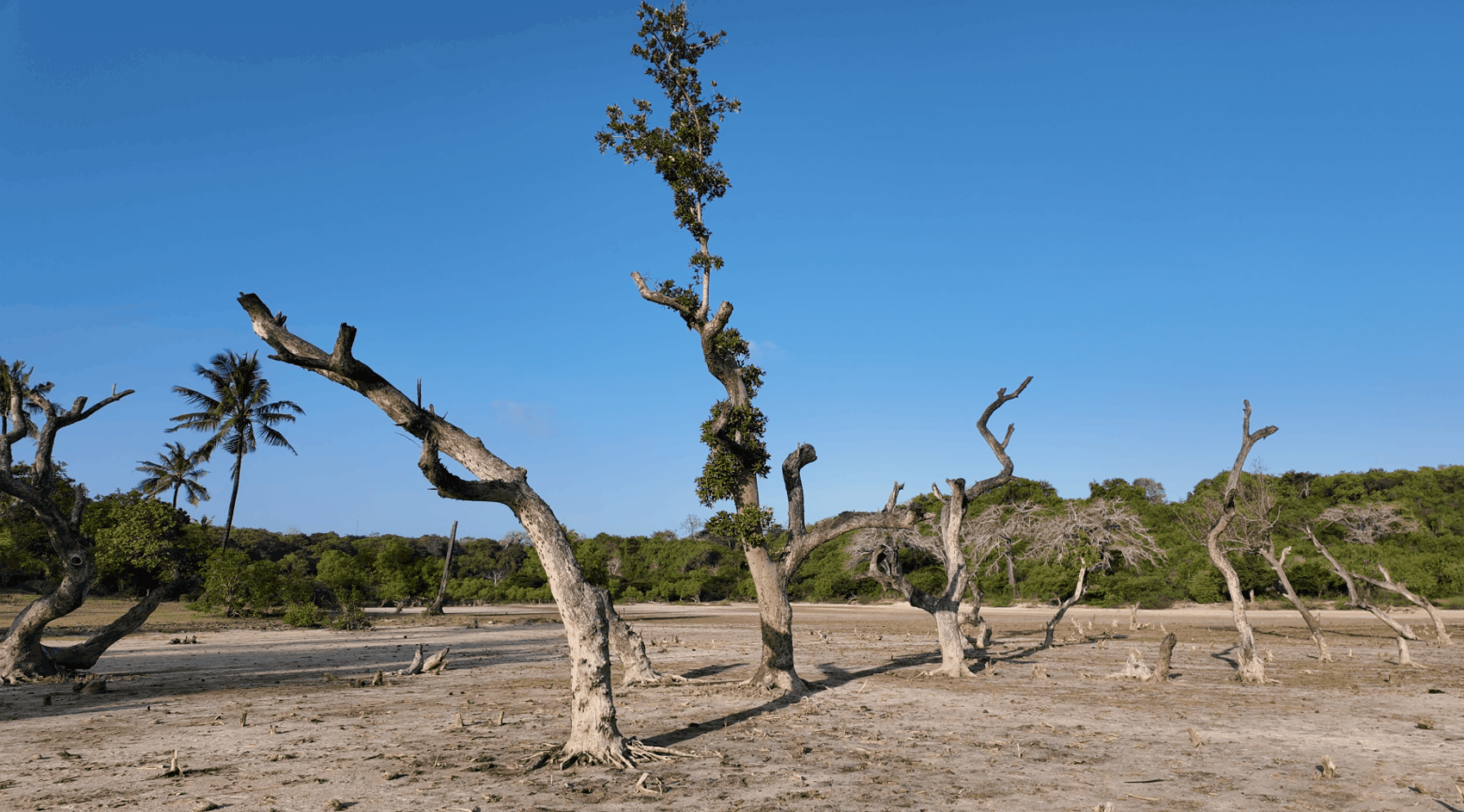
Kilifi Creek Mangrove Forest is a vital estuarine ecosystem located in Kilifi County, on the Kenyan coast, approximately 50 kilometers north of Mombasa. This pristine tidal creek, which cuts deep into the mainland, is lined with some of the most extensive and well-preserved mangrove forests along the East African coast. Unlike open ocean mangroves, Kilifi Creek is a sheltered, deep-water inlet that provides a unique and productive environment where saltwater from the Indian Ocean mixes with freshwater from seasonal rivers. The mangroves here are not only an ecological treasure but also a cornerstone of the local community’s economy, culture, and resilience against climate change. Managed by the Kenya Forest Service (KFS) and local Community Forest Associations (CFAs) , this ecosystem represents a model of community-led conservation and sustainable resource use.
Key Information
- Location: Kilifi Creek, Kilifi County, Kenyan Coast, approximately 50 km north of Mombasa.
- Size: The mangrove cover within the creek is estimated at over 1,500 hectares, forming part of the larger Kilifi Creek-Mtwapa Creek mangrove complex.
- Status: A protected Mangrove Forest Reserve, managed under Kenya’s Forest Conservation and Management Act.
- Ecosystem Type: Tropical estuarine mangrove forest, characterized by a complex network of tidal channels, mudflats, sandbanks, and fringing mangrove vegetation.
- Climate: Tropical coastal climate with average temperatures of 24-30°C (75-86°F). Bimodal rainfall: long rains (April-June) and short rains (October-November), followed by dry, hot periods.
Type of Mangrove Trees and Flora
Mangroves are salt-tolerant trees with specialized adaptations such as aerial roots (pneumatophores), stilt roots, and viviparous seeds (propagules). Kilifi Creek hosts eight of the nine mangrove species found in Kenya, representing high species diversity.
Dominant Mangrove Species:
- Mkoko (Rhizophora mucronata): The most iconic mangrove species. Easily recognized by its arching stilt roots and long, pencil-shaped propagules. It forms dense stands along the water’s edge and is highly valued for its strong, durable timber.
- Mkandaa (Ceriops tagal): A smaller, shrubby mangrove that dominates the middle and upper intertidal zones. It is a prolific colonizer and is prized for its hard, heavy wood, traditionally used for building poles and charcoal.
- Mchu (Avicennia marina): Characterized by its pencil-like aerial roots (pneumatophores) that protrude from the mud to absorb oxygen. It is often the pioneer species at the seaward edge and tolerates high salinity.
- Msikundazi (Bruguiera gymnorrhiza): Known for its knobby knee roots and large, showy flowers. It is a slow-growing species found in the landward zone, often indicating well-developed, mature mangrove forest.
- Other Species: The creek also hosts Mkungu (Xylocarpus granatum) , a large, slow-growing mangrove with a distinctive buttressed trunk and large cannonball-like fruits; Mwarubaini (Sonneratia alba) , a pioneer species with spike-like pneumatophores; and Kikandazi (Lumnitzera racemosa) , found in the landward fringe.
Associated Flora:
- Halophytes and Salt-Tolerant Plants: The terrestrial fringe features saltbush (Suaeda monoica) and other halophytic shrubs.
- Seagrass Beds: Adjacent to the mangroves, extensive seagrass meadows (Thalassia, Halodule species) provide critical feeding grounds for sea turtles and dugongs.
Longevity of the Specimens
Mangrove trees are among the longest-living trees in coastal ecosystems, with their age influenced by species, environmental conditions, and human impact.
- Ancient Specimens: The slow-growing Msikundazi (Bruguiera gymnorrhiza) and Mkungu (Xylocarpus granatum) are the true ancients of Kilifi Creek. Individual trees of these species are estimated to be over 200 to 300 years old. Some of the largest Xylocarpus individuals, with massive buttressed trunks, may exceed 400 years. These giants have stood for centuries, surviving storms, sea-level changes, and human history.
- Mature Mangroves: Mkoko (Rhizophora mucronata) trees typically have a lifespan of 50 to 100 years, reaching peak maturity around 50-70 years. Mchu (Avicennia marina) can live for 80 to 150 years, while Mkandaa (Ceriops tagal) is generally shorter-lived, averaging 50 to 80 years.
- Growth and Regeneration: Mangroves are remarkably resilient. Their unique viviparous reproduction—where seeds germinate while still attached to the parent tree—allows for rapid establishment. However, the old-growth forests in Kilifi Creek represent centuries of undisturbed growth, making them irreplaceable ecological assets.
Ecological and Socio-Economic Importance
- Coastal Protection: The dense root systems act as natural barriers, dissipating wave energy, reducing erosion, and protecting the town of Kilifi and its hinterland from storm surges and sea-level rise. This function is increasingly vital in the face of climate change.
- Biodiversity Hotspot: Kilifi Creek’s mangroves are a nursery for countless marine species. They provide critical habitat for:
- Fish: Juvenile snappers, groupers, rabbitfish, and barracuda find shelter among the roots.
- Crustaceans: Mud crabs (Scylla serrata), prawns, and fiddler crabs abound.
- Marine Mammals: The creek is occasionally visited by dolphins and, historically, dugongs (though now rare).
- Sea Turtles: Green turtles (Chelonia mydas) and hawksbills (Eretmochelys imbricata) feed in the seagrass beds and rest in the mangrove channels.
- Birds: The mangroves and adjacent mudflats are a haven for migratory and resident birds, including kingfishers, herons, egrets, and the threatened crab-plover.
- Carbon Sequestration: Mangroves are among the most carbon-rich ecosystems on Earth, often referred to as “blue carbon” ecosystems. The deep, anoxic soils of Kilifi Creek store vast amounts of carbon—several times more per hectare than tropical rainforests—making their conservation critical for climate change mitigation.
- Livelihoods and Community: The mangroves are the lifeblood of the local community. Sustainable harvesting provides:
- Building Materials: Poles for construction (makuti roofing frames, fencing).
- Fuelwood: Charcoal and firewood, managed through community-led harvesting plans.
- Fisheries: The creek supports artisanal fishers, providing food and income.
- Ecotourism: Guided canoe tours, birdwatching, and boardwalk trails offer sustainable income alternatives.
- Cultural Significance: For the Mijikenda and other coastal communities, mangroves have deep cultural roots. They are associated with traditional beliefs, rituals, and historical landmarks. The Kilifi Creek area also contains Swahili archaeological sites, reflecting centuries of coastal civilization.
Conservation and Challenges
Kilifi Creek’s mangroves face pressures from urbanization, agricultural runoff, and historical overharvesting. However, the establishment of Community Forest Associations (CFAs) has transformed management. These associations, in partnership with the Kenya Forest Service, implement:
- Participatory Forest Management (PFM): Community members are involved in planning, monitoring, and sustainable harvesting.
- Mangrove Restoration: Assisted natural regeneration and planting programs are rehabilitating degraded areas.
- Alternative Livelihoods: Ecotourism, beekeeping, and aquaculture projects reduce dependence on direct resource extraction.
- Education and Awareness: Local schools and community groups participate in conservation education.