

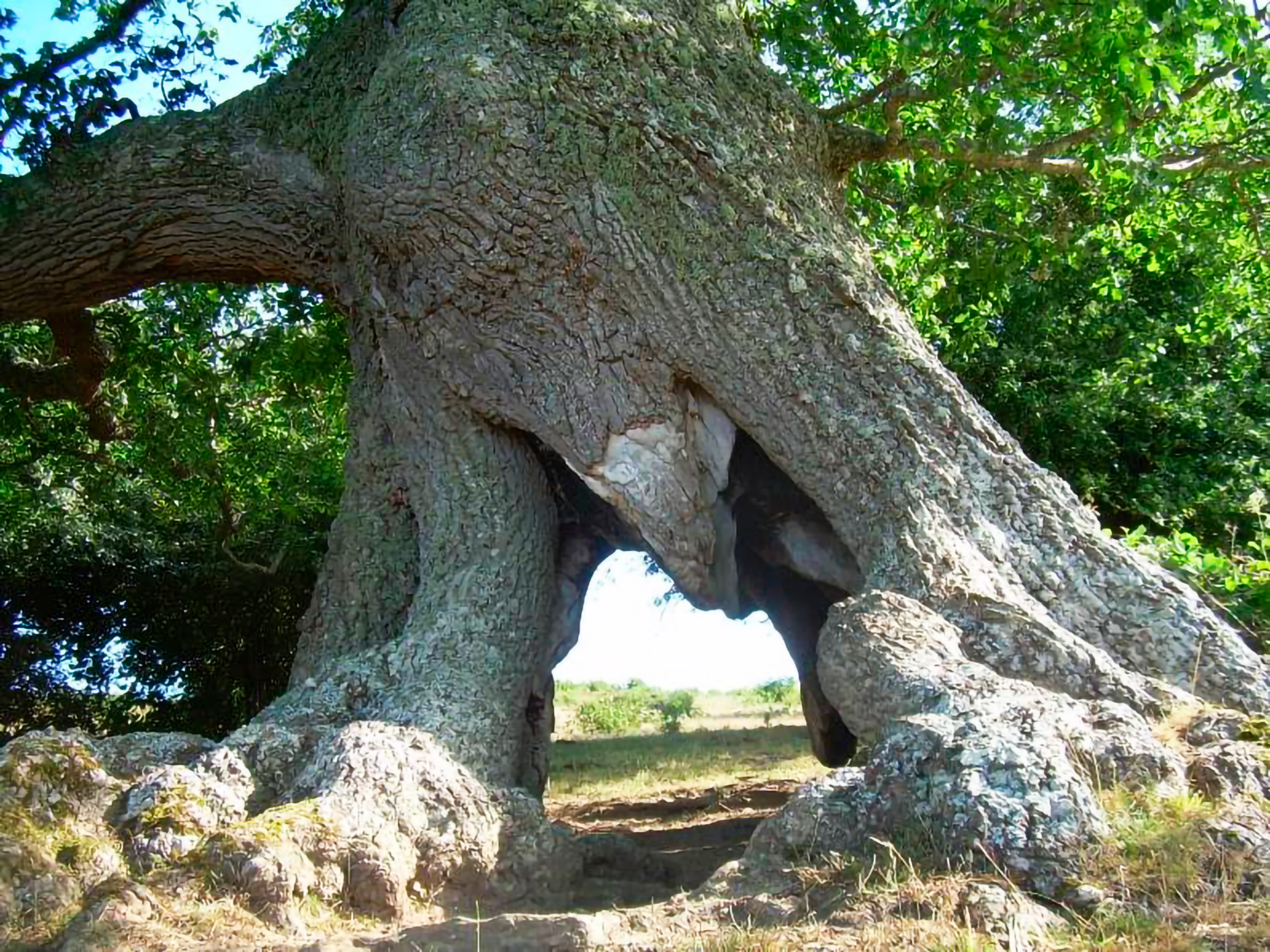
The Roble Sesteadero is one of the most singular and venerable trees in the province of Burgos, Spain. Located near the small village of Higón, in the municipality of Alfoz de Santa Gadea, this monumental oak stands as a living testament to the ancient Atlantic forests that once covered much of northern Castile. Its name—Sesteadero, meaning a place where livestock rests at midday—speaks to its deep connection with the pastoral traditions that have shaped this landscape for centuries. Included in the Catalog of Vegetal Specimens of Singular Relevance of Castile and León, this ancient tree is a cherished natural monument, admired by hikers, nature lovers, and those who appreciate the silent grandeur of Spain’s oldest trees .
Key Information
- Name: Roble Sesteadero (also known as El Roble del Sesteadero or Roble de Higón)
- Scientific name: Quercus robur (English oak / pedunculate oak)
- Location: Near the village of Higón, municipality of Alfoz de Santa Gadea, province of Burgos, Castile and León, Spain
- Trunk perimeter: Approximately 6 to 7 metres at the base
- Height: Approximately 13 metres
- Estimated age: Unknown with precision, but likely several centuries old; local speculation suggests it could be 400–600 years old or more
- Status: Included in the Catalog of Specimens of Singular Relevance of Castile and León (since 2006)
- Ecosystem: Atlantic mixed forest, within the Monte Hijedo forest massif
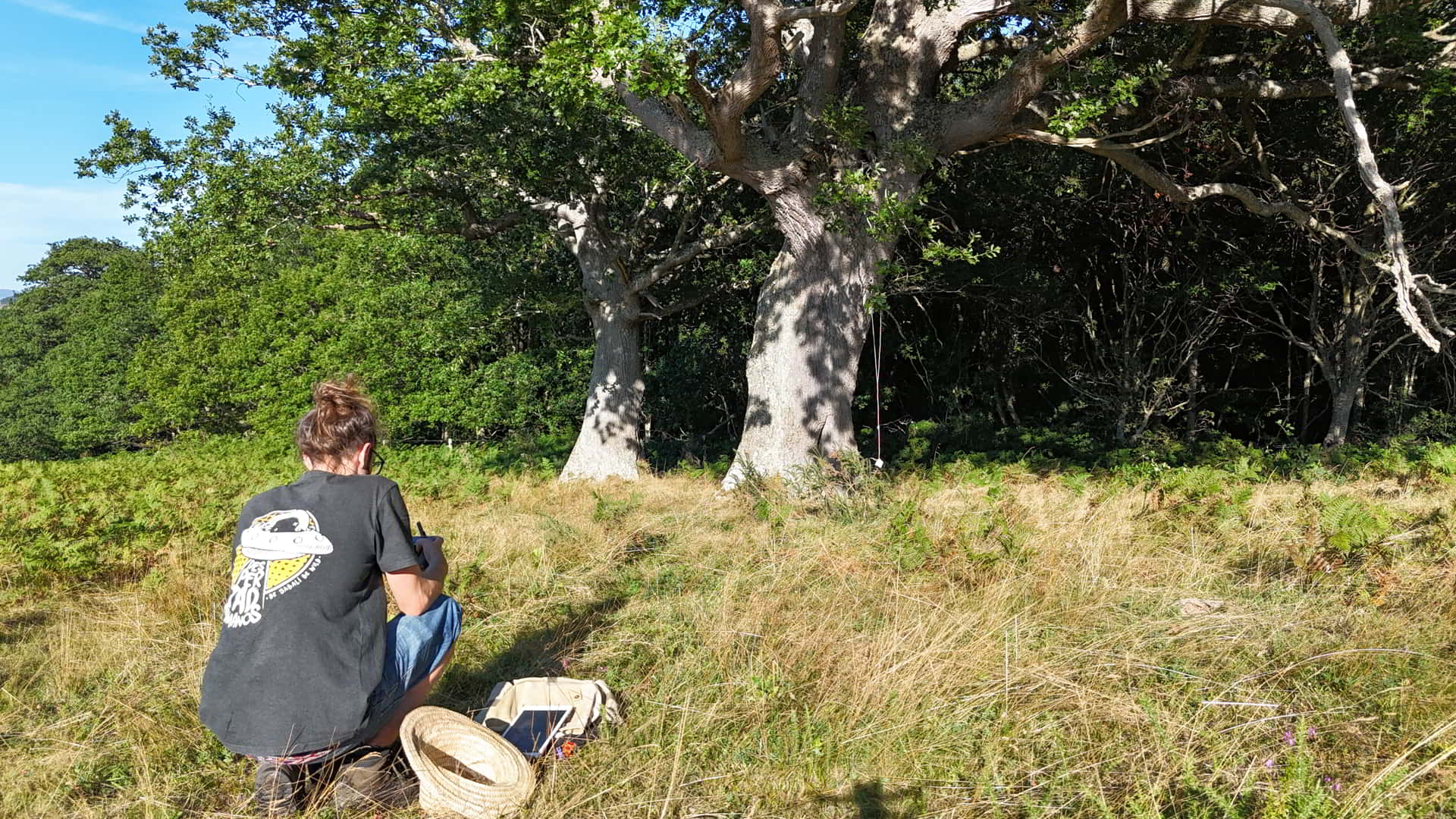
Physical Characteristics and Singularity
The Roble Sesteadero is a tree of extraordinary presence, distinguished by its massive size, ancient appearance, and a distinctive hollow trunk that gives it a unique character .
- The hollow trunk: The most distinctive feature of the Roble Sesteadero is the large cavity at its base. This hollow, which children have historically used to pass through the tree, adds to its photogenic and magical quality. However, it also represents a structural vulnerability that could, over time, contribute to the tree’s decline .
- Name origin: The name Sesteadero derives from the traditional use of the tree’s shade by livestock. Shepherds and cattle would rest (sestear) under its broad canopy after grazing in the surrounding pastures, a practice that continues in living memory .
- Species: The tree is a Quercus robur, commonly known as the English oak or pedunculate oak, a long-lived species characteristic of Atlantic climate zones. This species is well-represented in the Monte Hijedo forest, one of the largest and best-preserved deciduous forests in northern Spain .
Longevity and Age Debate
Determining the exact age of the Roble Sesteadero is challenging, as oaks do not reliably reveal their age without core sampling, which can damage the tree.
- Estimated age: While no scientific core analysis has been published, local tradition and comparisons with similar-sized oaks suggest an age of several centuries. One local observer speculated that it could be 600 years old, while others suggest it may be 400–500 years old . Given its trunk perimeter of 6–7 metres, an age of 400–600 years is plausible for a Quercus robur growing in favourable conditions.
- Historical context: If the tree is indeed 500 years old, it would have been a mature specimen when the Catholic Monarchs ruled Spain and when Columbus was making his voyages to the Americas. It has witnessed the rise and fall of empires, the transformation of rural Castile, and the gradual decline of the traditional pastoral economy that once thrived in its shade.
- A witness to history: The village of Higón itself has medieval origins. Historical documents from the 14th century mention “Egon” (Higón) as part of the Alfoz de Santa Gadea under the lordship of the Marquesado de Aguilar . The Roble Sesteadero has stood in this landscape for most of that recorded history.
Ecological and Cultural Significance
- Part of Monte Hijedo: The Roble Sesteadero is located within the sphere of Monte Hijedo, one of the most extensive and best-preserved deciduous forests in northern Spain. This forest, which spans the border between Burgos and Cantabria, is dominated by Quercus robur (pedunculate oak) and also contains magnificent beech groves, holly trees, yews, alders, birches, and hazelnut trees . The area is designated as a Site of Community Importance (LIC) within the Natura 2000 Network .
- Pastoral heritage: The tree’s name is a direct link to the region’s deep pastoral traditions. For centuries, shepherds and their flocks rested under its shade, and the surrounding pastures remain an important resource for local livestock farmers. The Alfoz de Santa Gadea is a region where livestock farming—particularly cattle—has been the primary economic activity for generations .
- Biodiversity value: The hollow trunk and aged bark of the Roble Sesteadero provide habitat for a variety of insects, birds, and small mammals. Ancient oaks like this one are considered “keystone structures” in their ecosystems, supporting a disproportionately high level of biodiversity compared to younger trees.
- Cultural symbol: The tree is a source of local pride and a point of interest for visitors to the region. It is featured in hiking routes and blogs dedicated to the natural heritage of Burgos . One local writer expressed the tree’s timeless quality with these words: “My father grows old and the Oak remains, my children grow up and the Oak remains, I change and the Oak remains” .
Visiting the Roble Sesteadero
The Roble Sesteadero is accessible to visitors and is a popular destination for hikers exploring the Monte Hijedo forest and the villages of the Alfoz de Santa Gadea.
- Location: The tree is located near the village of Higón, in the municipality of Alfoz de Santa Gadea, approximately 90 kilometres northeast of Burgos city. The nearest towns are Santa Gadea and Quintanilla de Santa Gadea.
- Access: From the village of Higón, take the road toward Santa Gadea. Shortly before entering the village proper, there is a descending curve to the left; at this curve, a paved track branches to the right toward a farm building. From there, a short walk across a meadow leads to several large oaks, of which the Roble Sesteadero is the most impressive .
- Hiking routes: The Roble Sesteadero is a featured point on several hiking routes, including a circular route from Higón that explores the Monte Hijedo forest and the rocky formations of Los Portillones .
- Nearby attractions: Visitors to the area can also explore:
- Monte Hijedo: One of Spain’s largest deciduous forests, with marked trails such as the PR-BU 30 .
- The “Tumbas de los Moros”: An early medieval necropolis with 19 anthropomorphic rock-cut tombs in Quintanilla de Santa Gadea, dating from the 8th–10th centuries .
- Santa Gadea Church: A small Romanesque church with origins in the early Middle Ages .
- The Alfoz villages: The traditional mountain architecture of Higón, Quintanilla, and Santa Gadea, with their characteristic wooden balconies and stone houses, is well worth exploring .
Remember: The Roble Sesteadero is a protected tree. Visitors should respect the surrounding pastureland, close gates, and avoid lighting fires or causing damage to the tree’s roots and bark. The tree’s hollow trunk, while inviting, is fragile; climbing or entering the cavity should be avoided to preserve this ancient giant.
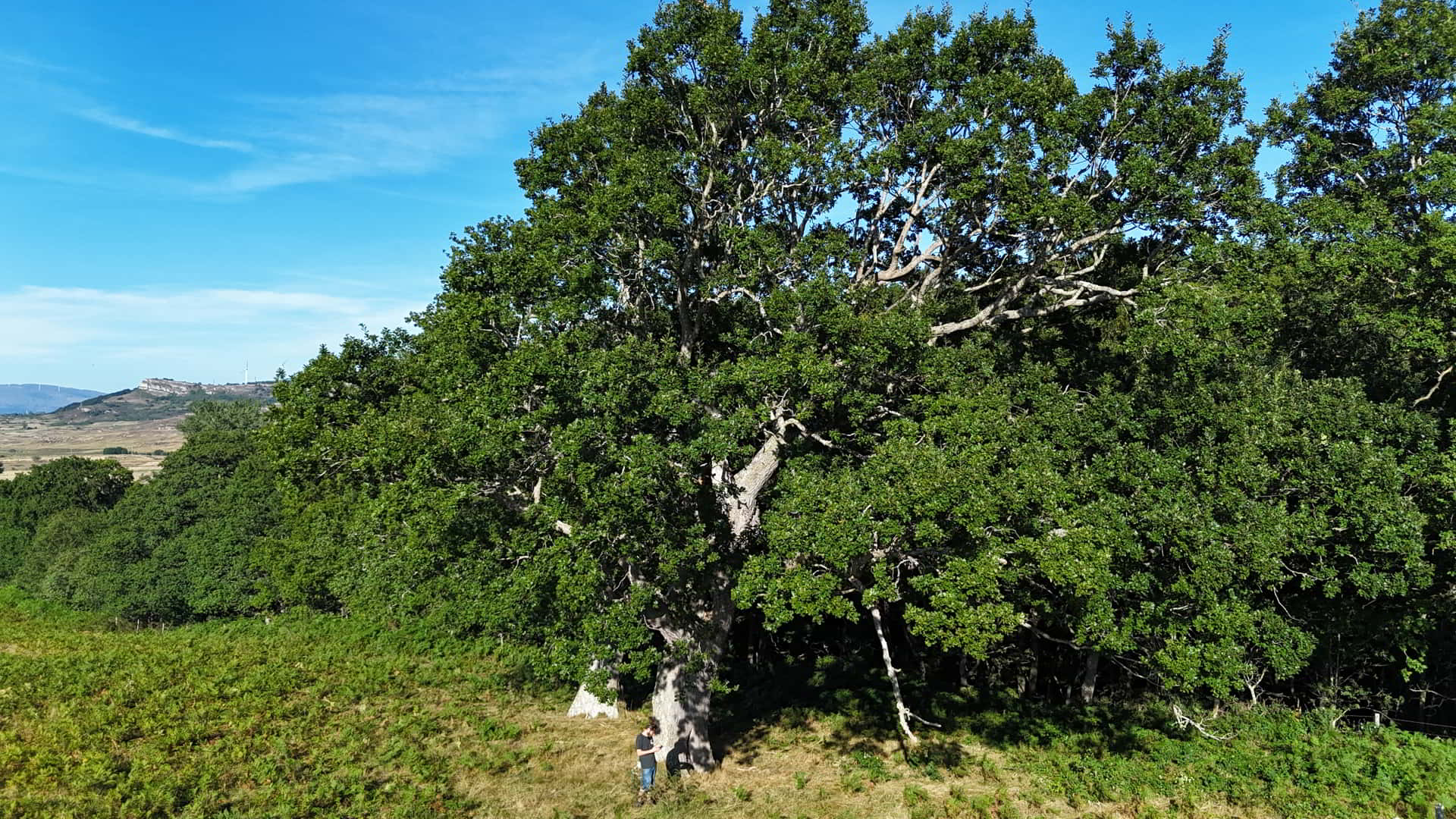
A Living Memory of the Land
The Roble Sesteadero stands as a living memory of the ancient forests and pastoral traditions of Castile. Its gnarled, hollow trunk and spreading canopy have sheltered generations of shepherds, livestock, and wanderers. In a world of constant change, this ancient oak remains—a silent witness to the passage of time, a symbol of endurance, and a reminder of the deep bonds between the people of the Alfoz de Santa Gadea and the land they have tended for centuries