
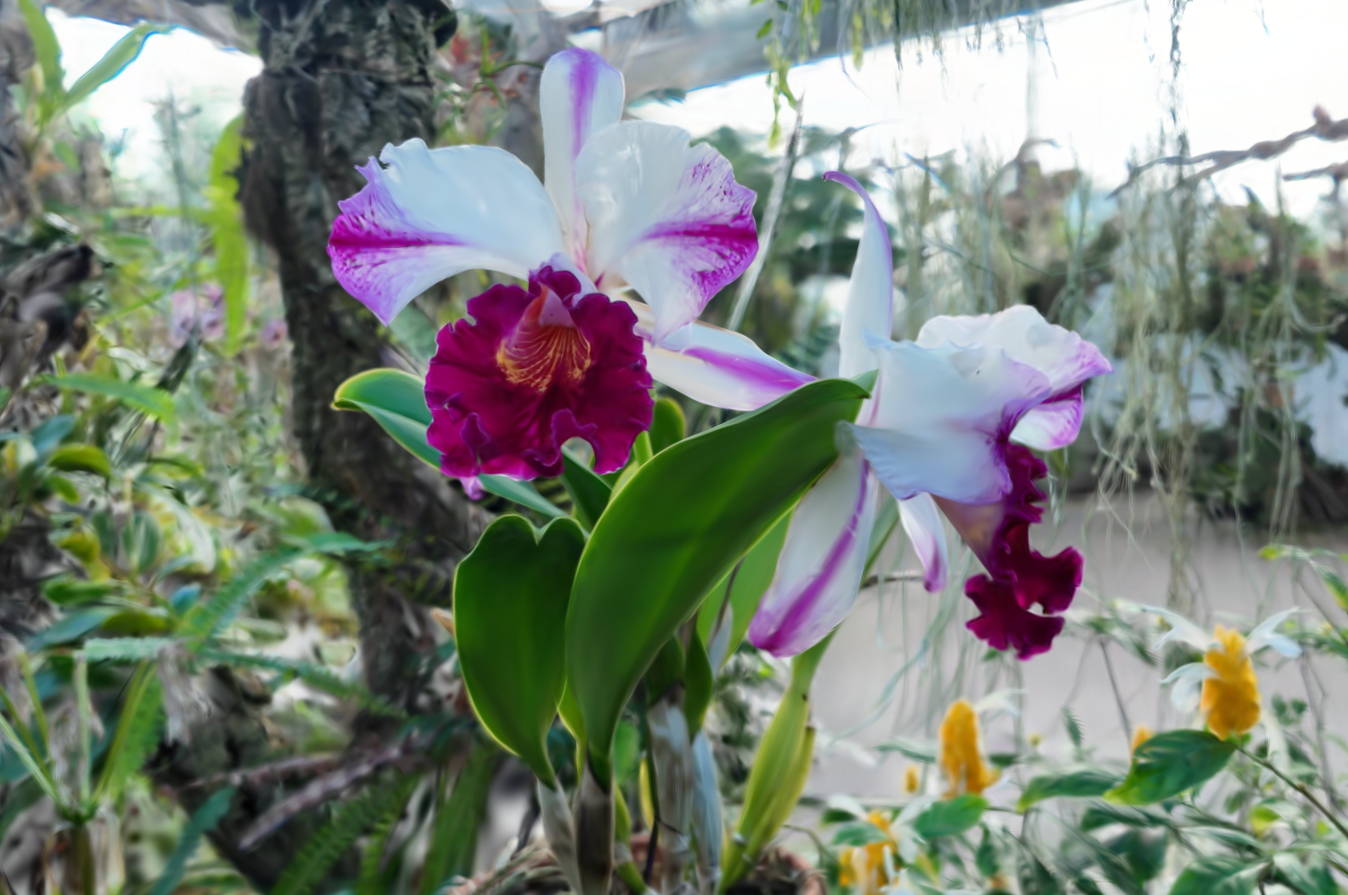
At Sinfonía Biótica, documenting a specimen is not just photographing it. It is turning it into a digital twin: a three-dimensional counterpart that can be explored, archived, shown on the web or taken into a virtual visit, and that holds a particular moment in its life — a flowering, a season, a size.
To do that we combine three complementary techniques: Gaussian splatting, LiDAR and photogrammetry. Each one contributes something different; together they make possible a high-fidelity 3D digitisation of trees, plants and botanical specimens, along with records of flowering cycles, seasonal changes and growth over time.
Three ways to capture a living body
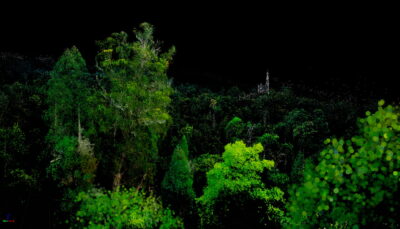
Gaussian splatting. From a set of photographs, this technique reconstructs the specimen as a field of luminous points that, viewed in real time, produces a photorealistic image. It is well suited to interactive web viewers and to a smooth camera movement through the piece, as if the specimen were right there. On the project’s technology page we describe how, with software such as Postshot and Kiri Engine, we obtain more accurate or lighter point clouds, depending on how they will be used afterwards.
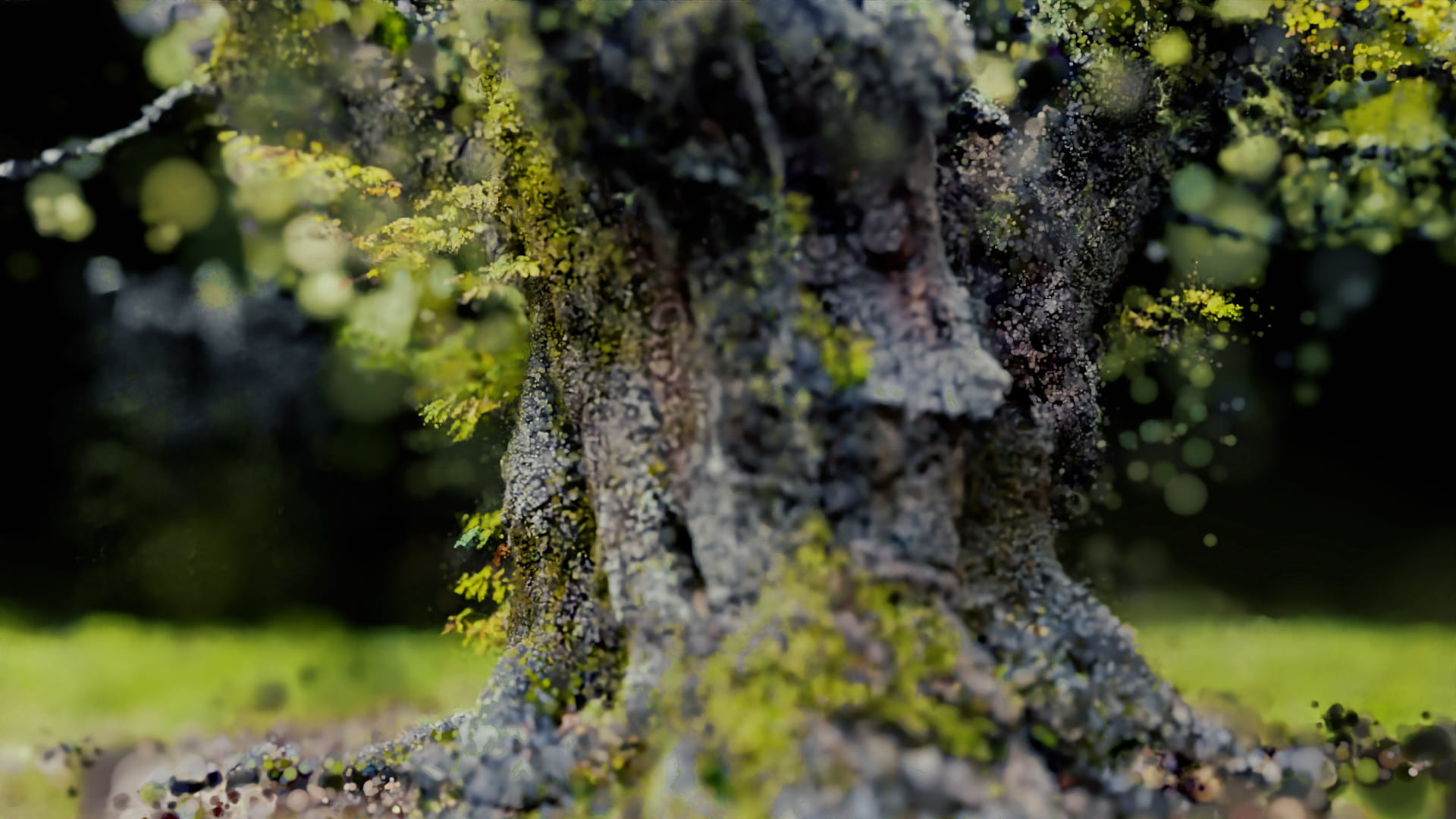
Photogrammetry. It compares many shots of the same specimen to reconstruct its volume and cover it with texture. The result is a mesh — a geometric skin — that can be cleaned, optimised and textured: the same process we followed with the six specimens at the Estepona Orchidarium. It is especially useful when a solid model is needed for an archive, an exhibition or an audiovisual production.
LiDAR. It measures distances with a pulse of light and returns precise geometry, at real scale. When the specimen is a monumental tree, or when its shape needs to be compared over time, that measurement matters: not only how it looks, but how large it is and how it is built. We use it alongside the other two techniques, not instead of them.
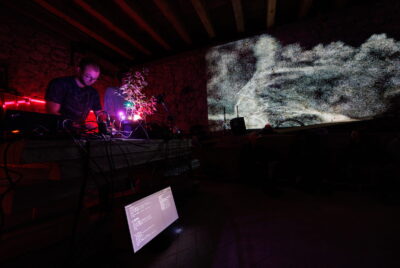
It is not a matter of choosing one technique and discarding the others. A single capture can draw on photographs — for colour and surface detail — and on a precise measurement of form. Then comes the craft work we have already described in other projects: manual cleaning of the point clouds, optimisation and texturing, and connecting those twins to the rest of the project’s data. In installations, the clouds are combined with biodata in TouchDesigner; in the virtual reality experience, with Unreal Engine and the LumaAI plugin.
What we deliver
The digital twin does not stay on a computer. It can become an interactive 3D viewer for the web or for a gallery; a lasting digital archive of the collection, useful for conservation, research and public outreach; virtual visits and immersive VR experiences, for people who cannot come in person; and audiovisual pieces that start from those same models. If the project calls for it, the models can also be taken into an augmented-reality environment.
That same line of work also feeds Sinfonía Biótica’s virtual reality experience, created with the support of Spain’s Ministry of Culture: it includes digitised landscapes from real places in Spain and Portugal, so visitors can inhabit them as a shared landscape. And in a workshop at the University of Salamanca we started from this experience: we have digitised botanical specimens with Gaussian splatting for virtual reality installations presented at BIME 2024 and Ars Electronica.
Estepona Orchidarium: Digital twins
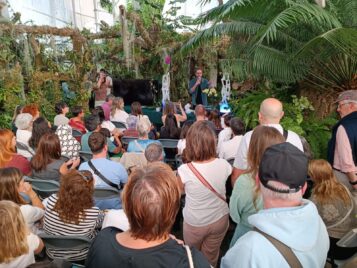
On 25 October 2026, “Listening to the Invisible” premiered at the Parque Botánico-Orquidario de Estepona, during the 11th Orchid and Collectible Plant Fair. On a vertical screen, the signals from two living orchids move particle clouds and animated sequences of digitised species: the twins give the image its form; the biodata, variation and breath.
The project also includes the 3D digitisation of six selected specimens: scanning, mesh cleaning, optimisation and texturing. Each one is captured at a particular stage of its bloom. These virtual clones feed the installation’s visuals and start a living archive of the Orchidarium’s flowerings, ready for the web, exhibitions and education. More specimens can be added over time.
That post already includes two interactive Gaussian splatting viewers; one of them is titled “orquidea06”. The same way of documenting a physical body can be seen in other specimens we have published as viewers: the Roble Sesteadero in Higón, the Drago Milenario de Icod de los Vinos, the Encina del Águila and the Fresna of Sancti-Spíritus, the last of these presented as “raw digitisation of its physical body”.
An archive that grows with the collection
If you run a botanical garden, a national or natural park, or a plant collection, and you want to document your most remarkable specimens — to conserve them, to study them, or so they can be visited from afar — write to us. We will prepare the archive, the viewers and, if it fits, the virtual visit or the audiovisual piece to suit your collection.
— b1tdreamer (Fernando Fernández), Sinfonía Biótica