
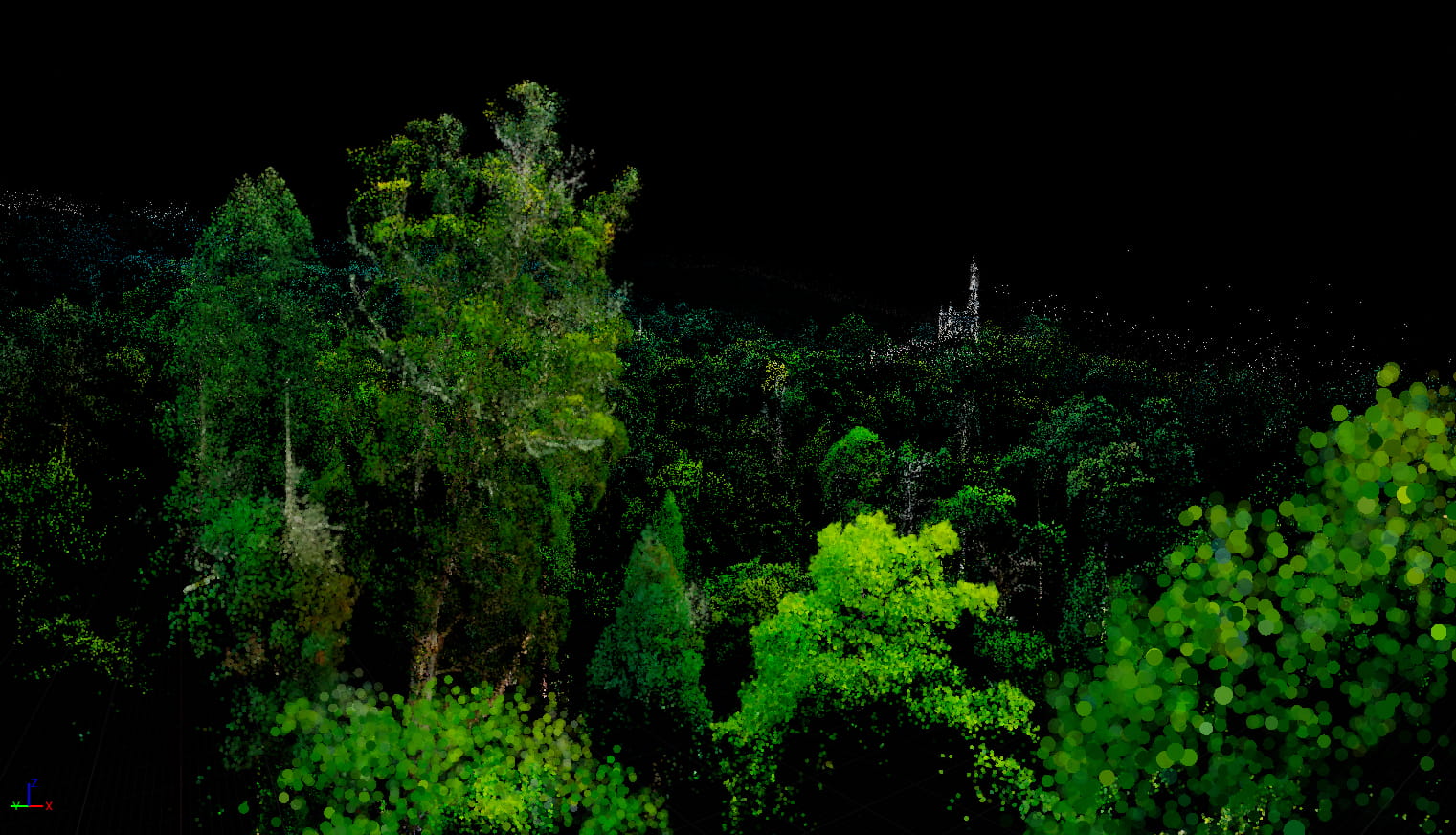
At Sinfonía Biótica, virtual reality is not a backdrop: it is a way of stepping inside the body of a living landscape. We digitise trees, plants and real places, record the electrical activity of those organisms, and bring it all together in a space you explore with a headset. There, the player and the plants compose an audiovisual piece together, one that never plays the same way twice.
The same logic leaves the headset and reaches the room as interactive works: pieces in which the plants’ biodata and the audience’s gestures shape sound and image in real time. These are some of the projects that show how.
Sinfonía Biótica: an inter-species virtual reality experience
Sinfonía Biótica is an inter-species creative ecosystem: a virtual reality experience in which human beings and non-animal organisms — plants and fungi — collaborate to create an interactive audiovisual piece. Each organism plays its part of the bio-composition, based on the data from its electrical impulses, movements and sounds. The movements of the person wearing the headset join the piece as one more instrument.
Trees and their surroundings are captured with photogrammetry and gaussian splatting and turned into point clouds; each tree’s electrical activity, recorded over hours with biodata devices, alters those clouds in real time. The experience is built in Unreal Engine, with FMOD for sound and the LumaAI plugin to bring in the scans. What you get depends on the time of day, the plant’s activity and how intensely the visitor moves: human and tree become co-authors.
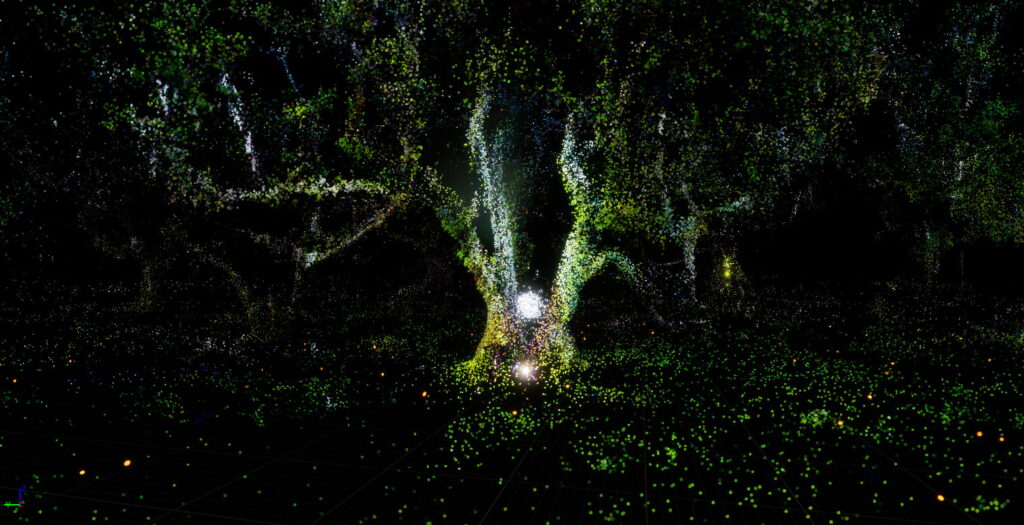
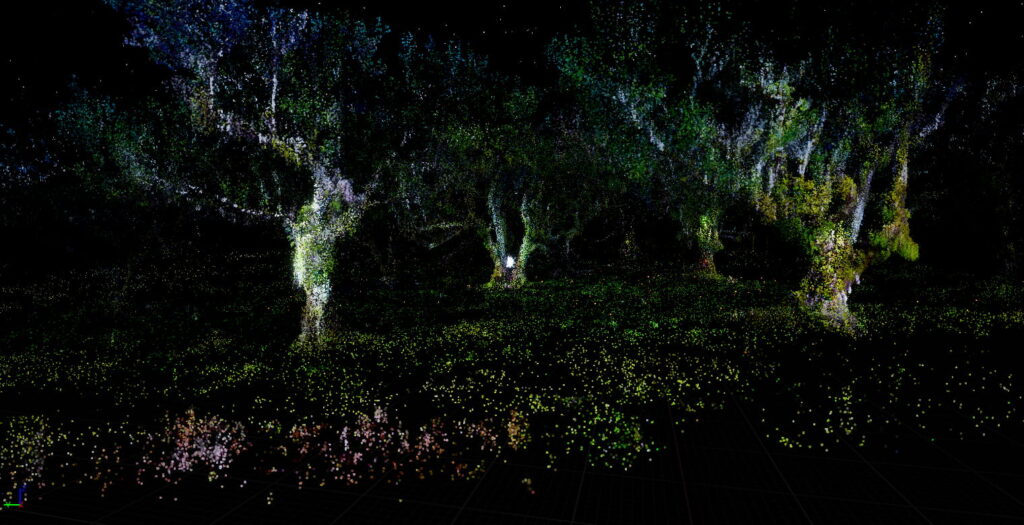
The project was developed in 2024 thanks to the Spanish Ministry of Culture grant for the promotion of the video game, podcast and other forms of digital creation sector. On 20 December 2024 we released the alpha version in early access, and it can now be downloaded for PC VR (Windows) on itch.io. Behind it is a small team: b1tdreamer (Fernando Fernández), María Castro, Pedro Núñez Ribot and Salomé Méndez.
Tested with real audiences
An immersive experience is only really understood when someone tries it for the first time. In October 2025 we took the latest version to MolinoLab, in Sancti-Spíritus (Salamanca), for a weekend of field research. Together with the i_mBODY Lab at Universidad Carlos III de Madrid we ran a usability and experience study with twenty-one people: UC3M students and residents of the Ciudad Rodrigo area.
Each session was an individual immersion of up to 12 minutes with Meta Quest 3 headsets, with questionnaires before and after. The study, written by Joaquín R. Díaz Durán, looks at empathy towards other forms of life, emotional and bodily impact, how the piece is read as art, and the usability of the interactive world. You can read the summary and download the full report in “Beyond the studio”.
Interactive works: when the audience steps into the piece
Not everyone has a headset to hand, and not every space calls for one. That is why the same technology also becomes installation. In September 2024, as part of the Biophony collective, we presented several interactive audiovisual installations at Ars Electronica Festival in Linz (Austria). In one of them, a plant connected to electrodes created its own soundtrack and reshaped the virtual space of a previously digitised real environment.
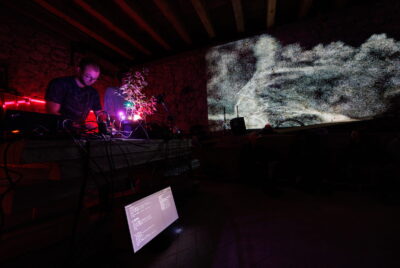
At PIFcamp, the international art and technology camp in Slovenia’s Soča valley, we scanned the courtyard with a drone and turned that point cloud into a responsive environment: the plants’ electrical impulses generated sound and moved the particles, and a piezo sensor repurposed as a touch button let visitors leave their mark on the piece. There we also gave an audiovisual performance with live coding artist Simon Goricar, in which the point clouds merged with visuals programmed live.
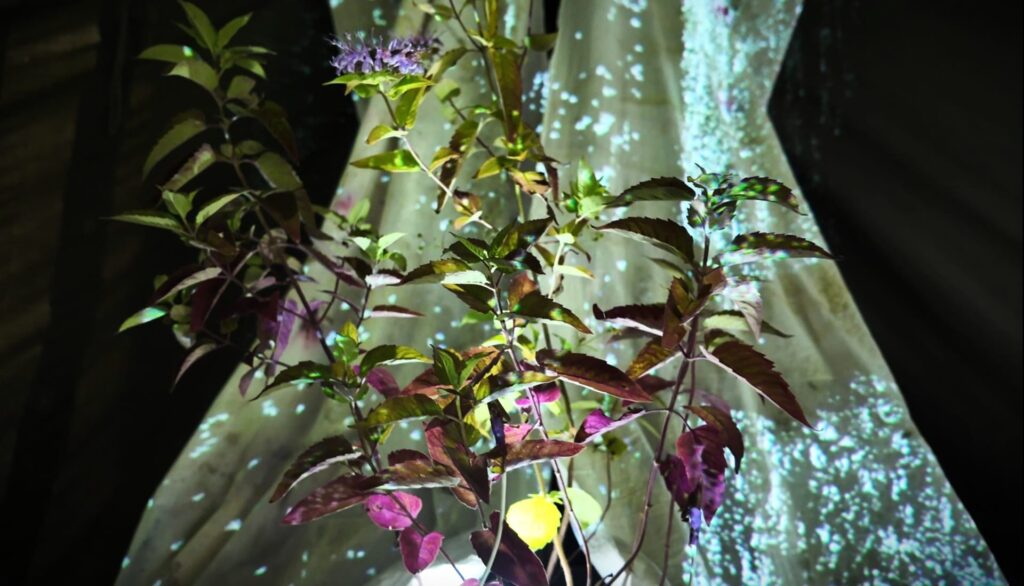
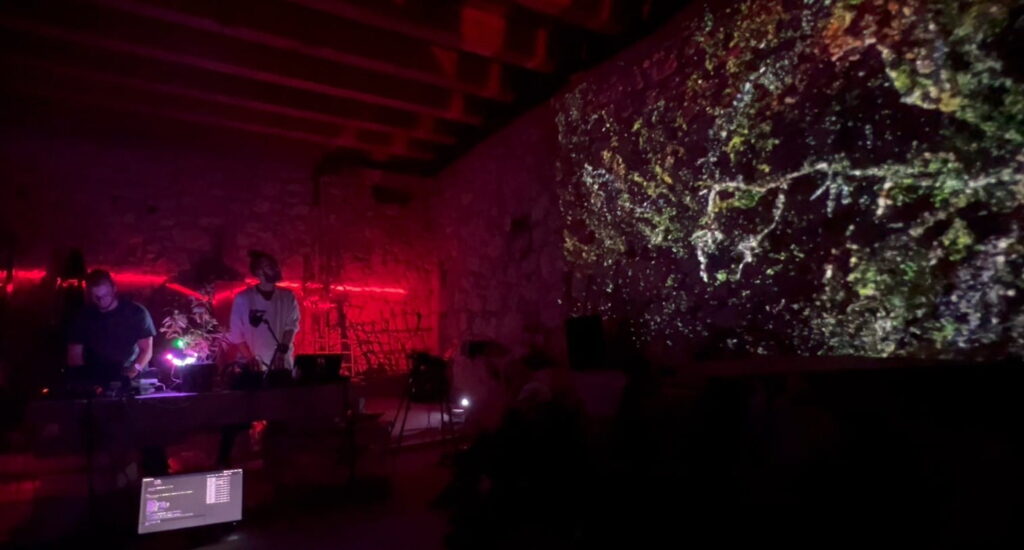
The piece we took to BIME 2024 in Bilbao was created precisely to introduce the virtual reality experience, and at the IX Culture and Ruralities Forum in Zafra visitors could touch sculptures and organic interfaces to change the sound and the virtual environments. Both are described in our case study on artistic installations.
In the media
In August 2024, the programme Culturas 2 on La 2 (RTVE) devoted a report to the experience. La Aventura del Saber (La 2) and Castilla y León Televisión also filmed reports.
What we can create for your space
Virtual reality experiences built from your specimens. We start from digital twins of the trees and plants in your collection to build virtual visits and immersive experiences that reach people who cannot come in person and stay accessible over time.
Interactive works driven by biodata. Pieces in which the plants’ electrical activity and the audience’s gestures shape sound, light and image in real time, from the size of a table to that of a greenhouse, with projection, screens or headsets depending on what the space calls for.
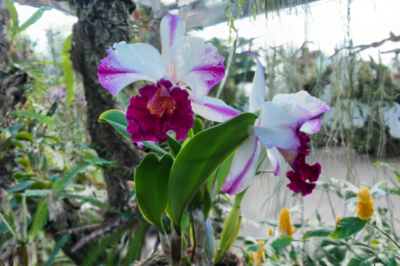
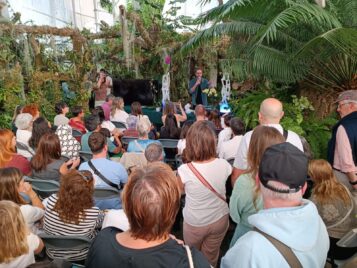
If you run a botanical garden, a park, a museum, a festival or a cultural centre and want your audience to step inside the landscape — and listen to it — write to us. You can also hear the plants live in “Listening to the Invisible”, the orchid concert at the Estepona Orchidarium.
— b1tdreamer (Fernando Fernández), Sinfonía Biótica