
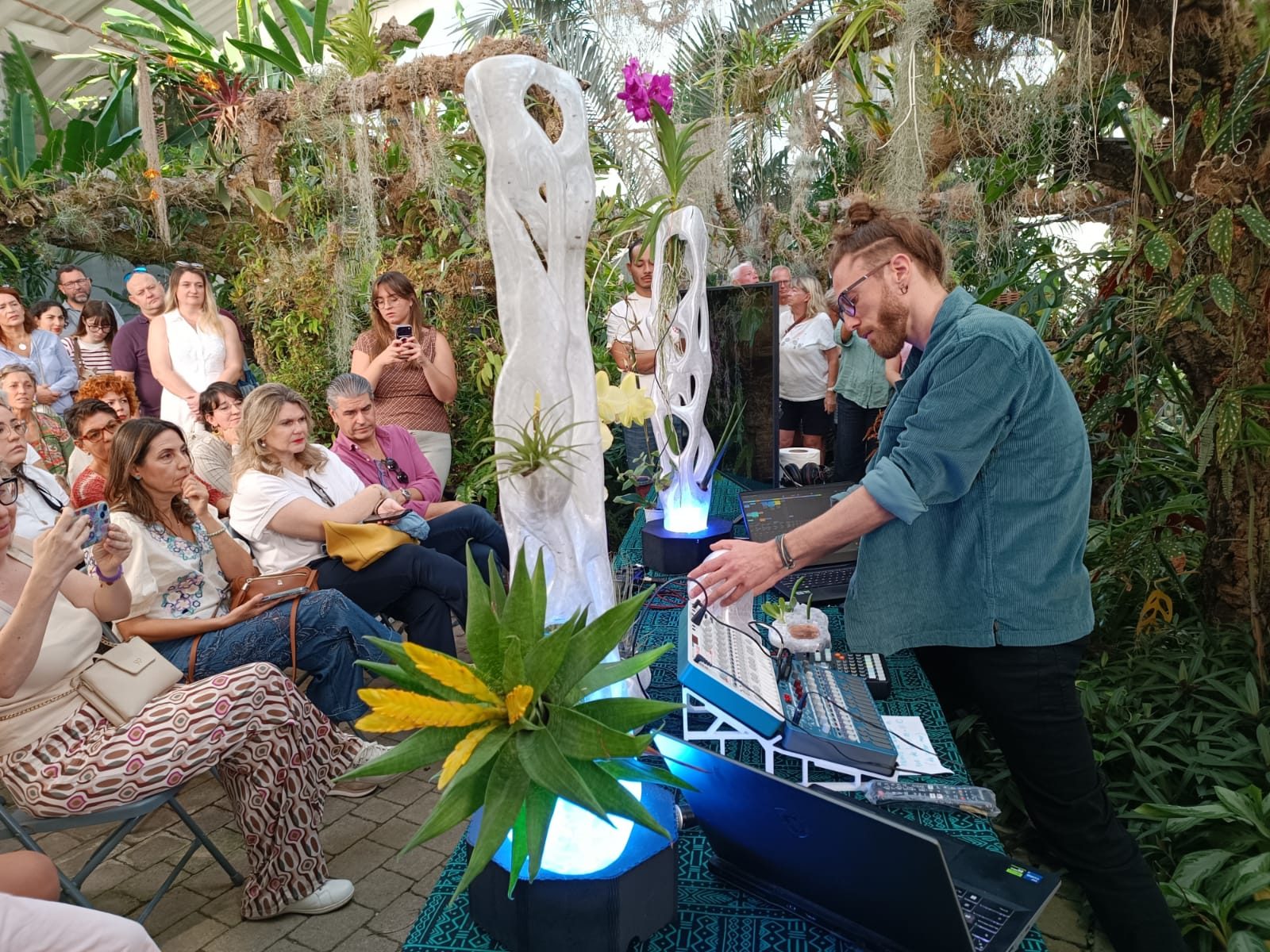
On Sunday 25 October 2026, at 10:00, the Parque Botánico-Orquidario de Estepona let two of its orchids take the lead. “Escuchar lo invisible” (Listening to the Invisible), a Sinfonía Biótica work developed at MolinoLab, premiered during the XI Feria de la Orquídea y Planta de Colección. The press called it the first concert with orchids ever held in Spain. The work is staying, too: it is now a permanent installation at the Orquidario.
What happened
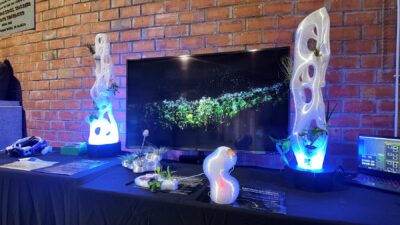
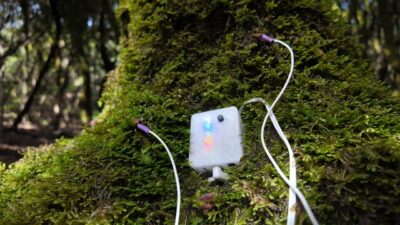
Plants don’t sing, and they don’t speak. They do produce electrical activity, and the right sensors can measure it. For this piece, two live orchids were each connected to a biodata unit. The sensors pick up changes in each plant’s bioelectrical signal and send them to an audiovisual engine. The engine maps those changes onto pitch, dynamics, timbre, density, rhythm and effects.
Each orchid plays its own virtual instrument, so you can hear two different “voices”. They aren’t fixed melodies. They are two ways of behaving, in timbre and dynamics, that answer each other across the space. Together they make a generative soundtrack that keeps changing and never repeats exactly. The spatial mix was designed for the Orquidario so the sound belongs to the garden instead of drowning it out.
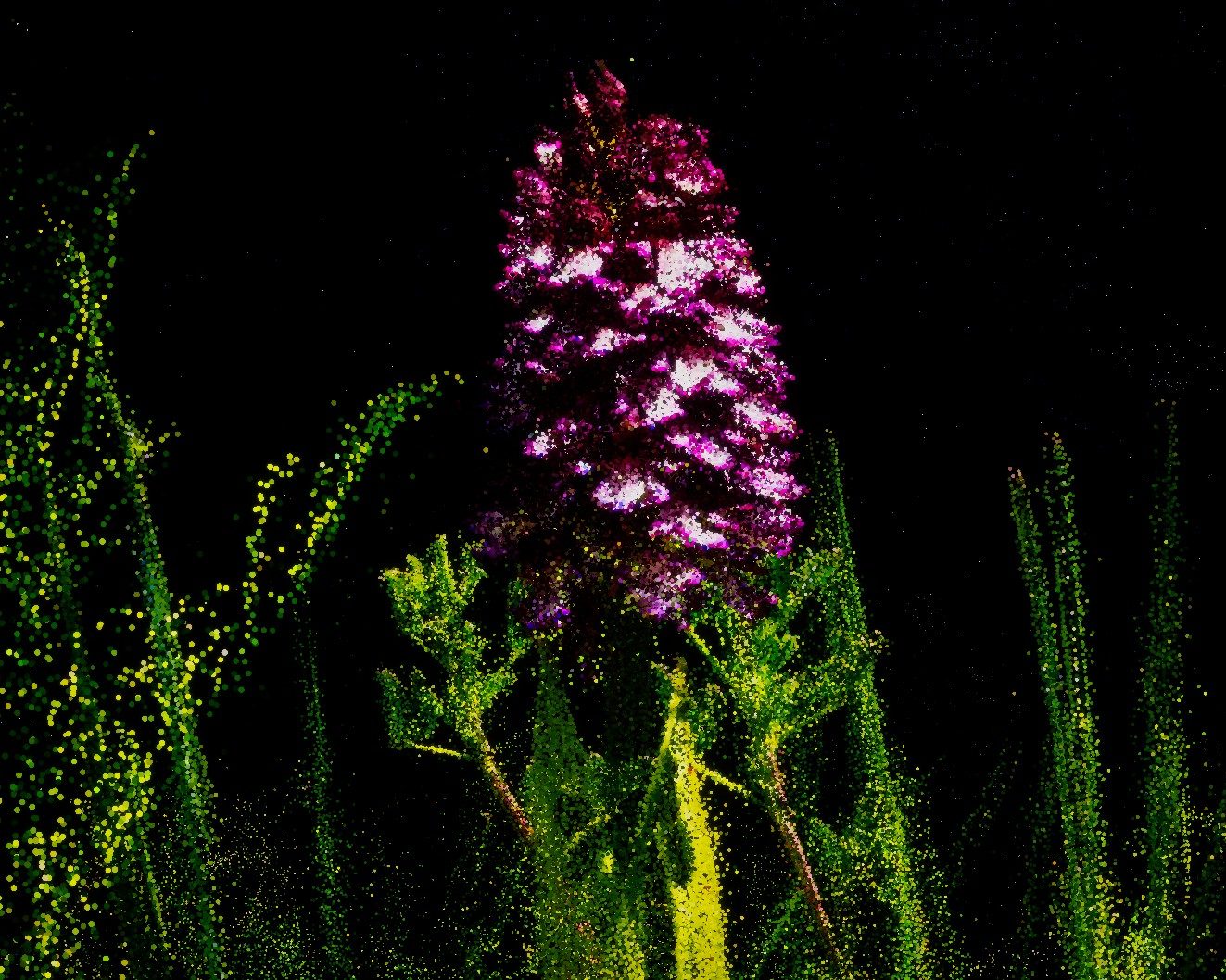
On a central vertical screen, the same signals move particle clouds and animated sequences of digitised orchid species. The image doesn’t show the sensor data literally. It interprets it: the digital twins give the image its form, and the biodata gives it variation and breath.
The experience
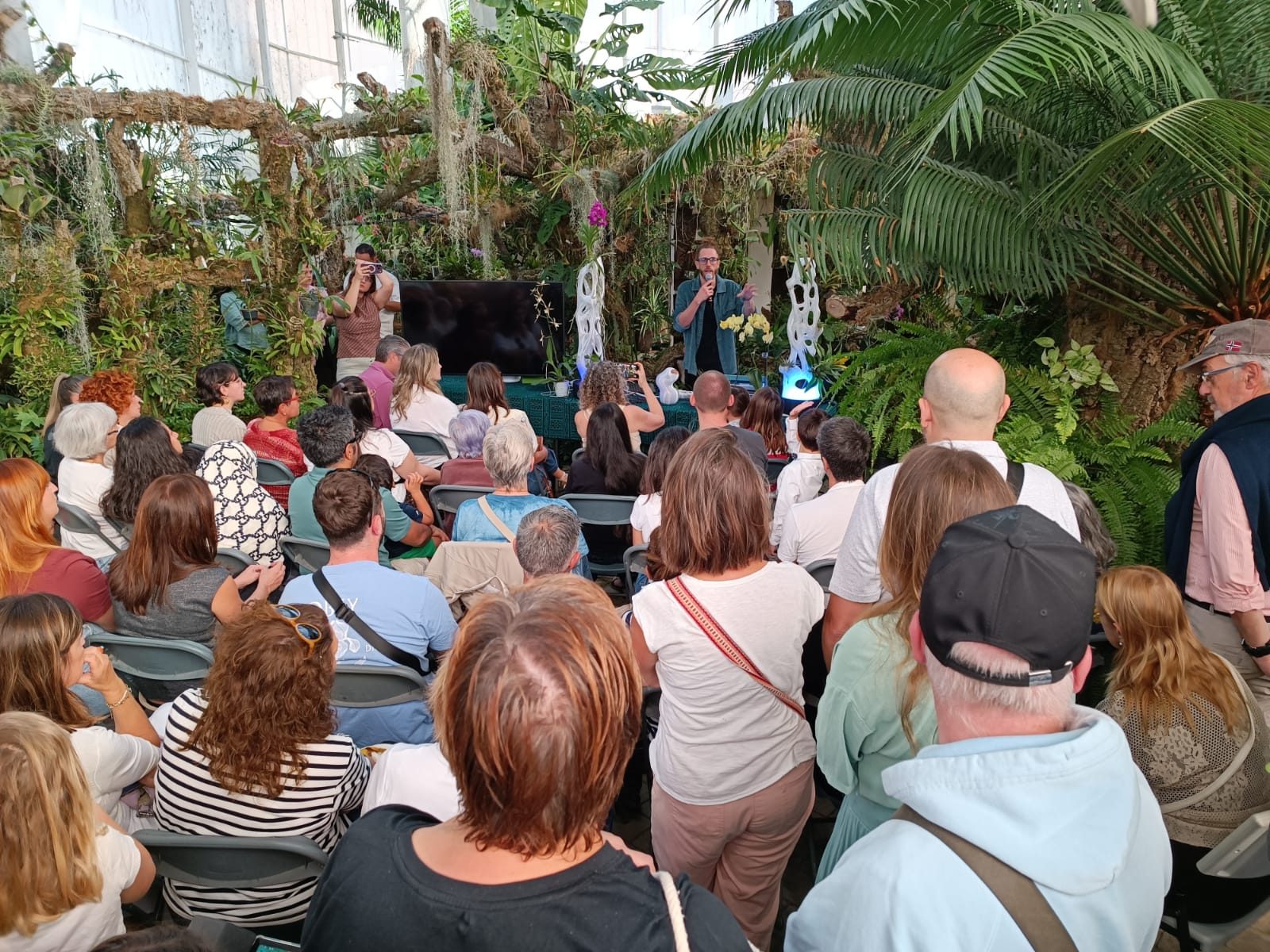
The premiere concert lasted an hour. According to Infobae, it caused a sensation among a large crowd of botany and music lovers, plus curious visitors keen to “listen” to the plants. The orchid house was packed: more than a hundred people came through.
“Plants don’t talk or vocalise,” I explained on the day, “but they interact with their surroundings and generate a whole range of electrical impulses.” Light, humidity, temperature and even the presence of visitors change the signal, so every moment is unique and can’t be repeated. Biodata doesn’t credit a plant with thoughts or intentions. As I told Europa Press, the piece works as “a bridge between biology and aesthetics”, making audible a side of plant life that usually stays invisible.
Digital twins
The project also covers 3D digitisation of six selected specimens: scanning, mesh cleaning, optimisation and texturing. Each one is captured at a particular stage of its bloom. These virtual clones feed the installation’s visuals and start a living archive of the Orquidario’s flowerings, ready for the web, exhibitions and education. More specimens and new virtual instruments can be added over time.
Credits
- Concept, sound and visual composition, live performance: Fernando Fernández (@b1tdreamer)
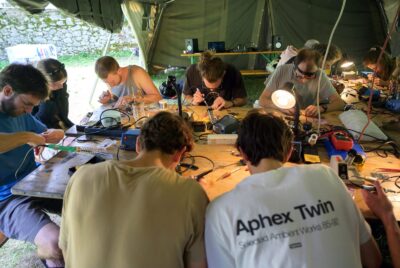
- Produced at MolinoLab, a space for artistic experimentation in Sancti-Spíritus (Salamanca), as part of Sinfonía Biótica
- Host: Parque Botánico-Orquidario de Estepona, Ayuntamiento de Estepona, within the XI Feria de la Orquídea y Planta de Colección
In the press
- RTVE (La 1, TV news): “Orquídeas para crear música”.
- Infobae (25 Oct 2026): Una ‘orquesta’ de orquídeas triunfa con un novedoso concierto que deja escuchar su música
- ABC (21 Oct 2026): Estepona hace cantar a las orquídeas
- Europa Press (21 Oct 2026): El Orquidario de Estepona tendrá una instalación pionera en la que las orquídeas crearán música en directo
- Diario Sur (21 Oct 2026): El Orquidario de Estepona convertirá en música en directo la actividad biológica de sus plantas
- Ayuntamiento de Estepona (21 Oct 2026): Official announcement
- Orchidarium Estepona (22 Oct 2026): El Orquidario de Estepona presenta el primer concierto con orquídeas que se realiza en España
- Planomato: El Orquidario de Estepona convierte plantas en música
- La Gaceta de Salamanca — “La voz de las orquídeas” (interview with Fernando Fernández, in Spanish)
Watch the reel
Visit
The installation is now a permanent part of the Orquidario (Calle Terraza, Estepona). Opening hours are Tuesday to Saturday, 10:00–13:30 and 15:00–18:00, and Sunday, 10:00–14:00. It is closed on Mondays.
Thank you to everyone who came to listen. Find out more at sinfoniabiotica.xyz and molinolab.org.