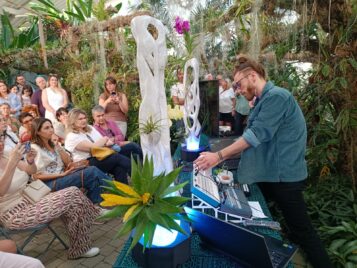

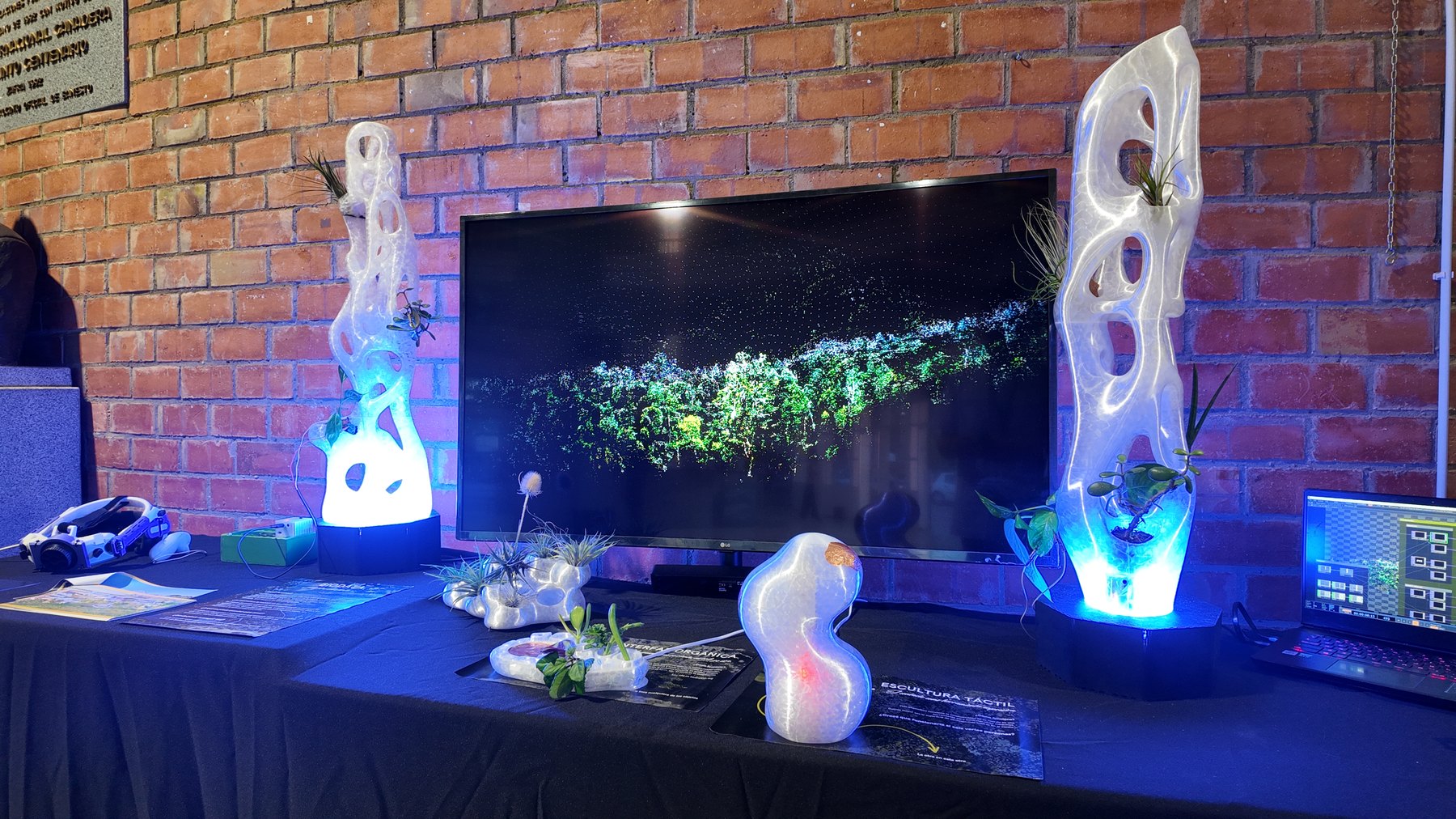
Between 20 and 22 October 2026, the IX Culture and Ruralities Forum gathered artists, cultural workers and rural communities in Zafra, Badajoz, under the theme Shared Geographies: Border Cultures and Cross-Border Cooperation. In the hall of the Central Pavilion at the city’s exhibition grounds, Sinfonía Biótica occupied that shared space not as a finished spectacle, but as an invitation to listen differently.
The work is an immersive virtual reality experience created with support from Spain’s Ministry of Culture. In it, humans, plants and fungi take part in the making of a unique audiovisual piece: each presence contributes through electrical signals, movement and interaction, and no two encounters sound or look the same. At the Forum, that idea left the headset and settled into the room as a quiet conversation between bodies, living organisms and digitized landscapes.
A dialogue across species
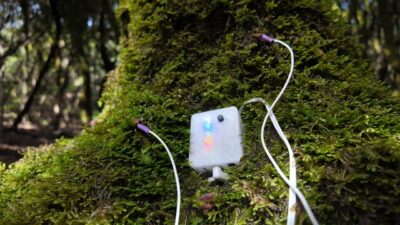
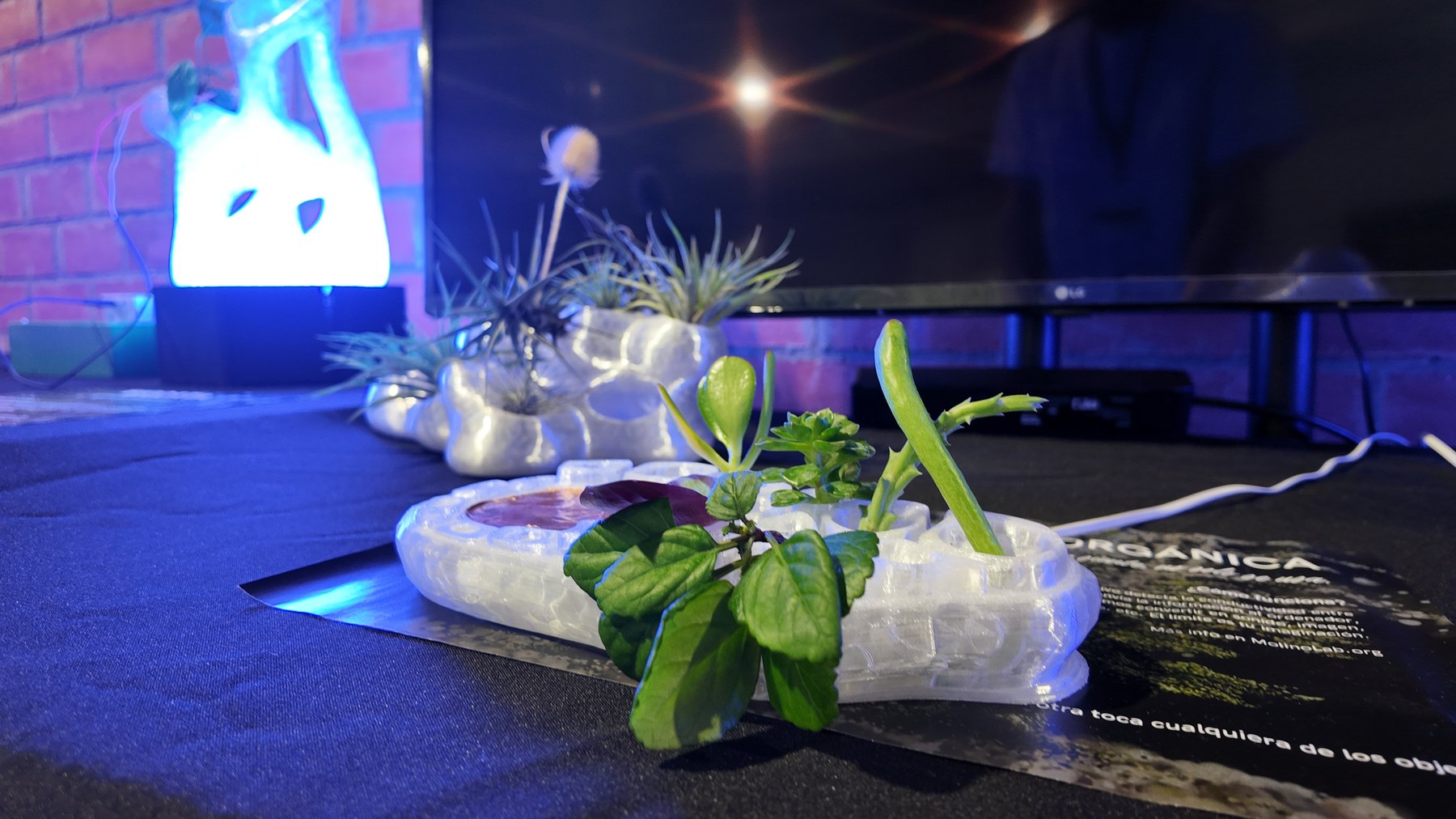
Sinfonía Biótica grows from a simple, demanding question: what happens when we treat non-animal life not as décor or metaphor, but as co-author? Plants and fungi generate fluctuating electrical activity; people bring gesture, attention and touch; together they compose a biocomposition that is also visual. The Forum’s official presentation framed the installation as an interspecies dialogue and a homage to Iberian and Macaronesian biodiversity—an attempt to translate living forest matter into data and algorithms without flattening it into spectacle.
In Zafra, that dialogue felt especially fitting. The Forum looked toward the Spanish–Portuguese border as a porous cultural territory of exchange, hybridity and shared memory. Sinfonía Biótica answered with another kind of border crossing: between species, between rural environments and digital space, between listening and making.
Landscapes that answer back
Alongside the VR experience, the installation opened digital environments drawn from real places in Spain and Portugal—natural and industrial sites captured and recomposed so visitors could enter them as shared scenery. These were not abstract “nature” backdrops. They carried the grain of specific rural and productive landscapes into the Forum hall, asking visitors to inhabit them with care rather than consume them as tourism.
Around the table, sculptural forms held living plants whose biodata helped shape the soundtrack. The sound did not arrive as a fixed score. It emerged from the organisms present, shifting with their electrical fluctuations and with the presence of the people who approached. Listening became collaborative: part botanical, part technological, part human.
Interfaces for shared listening
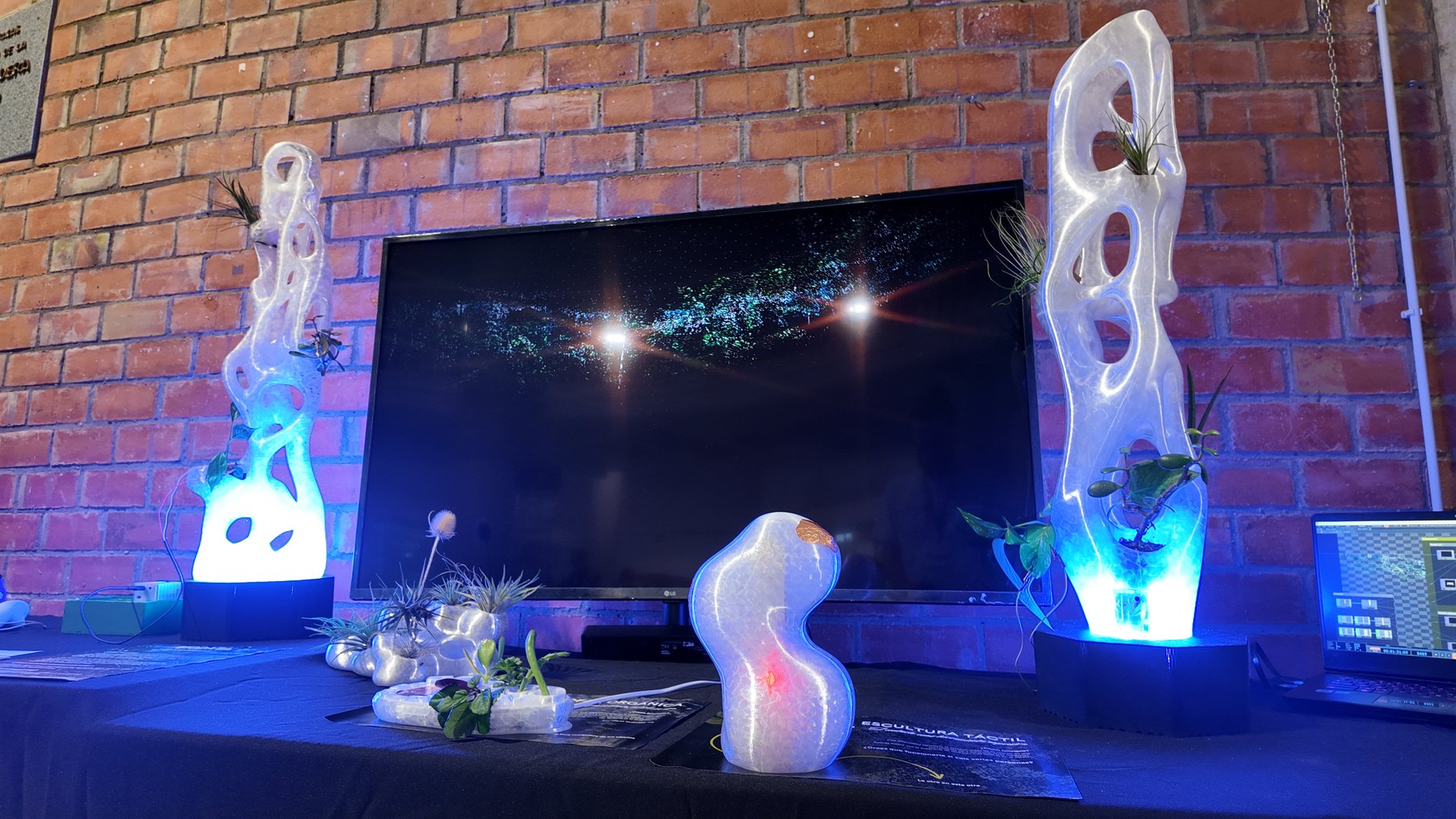
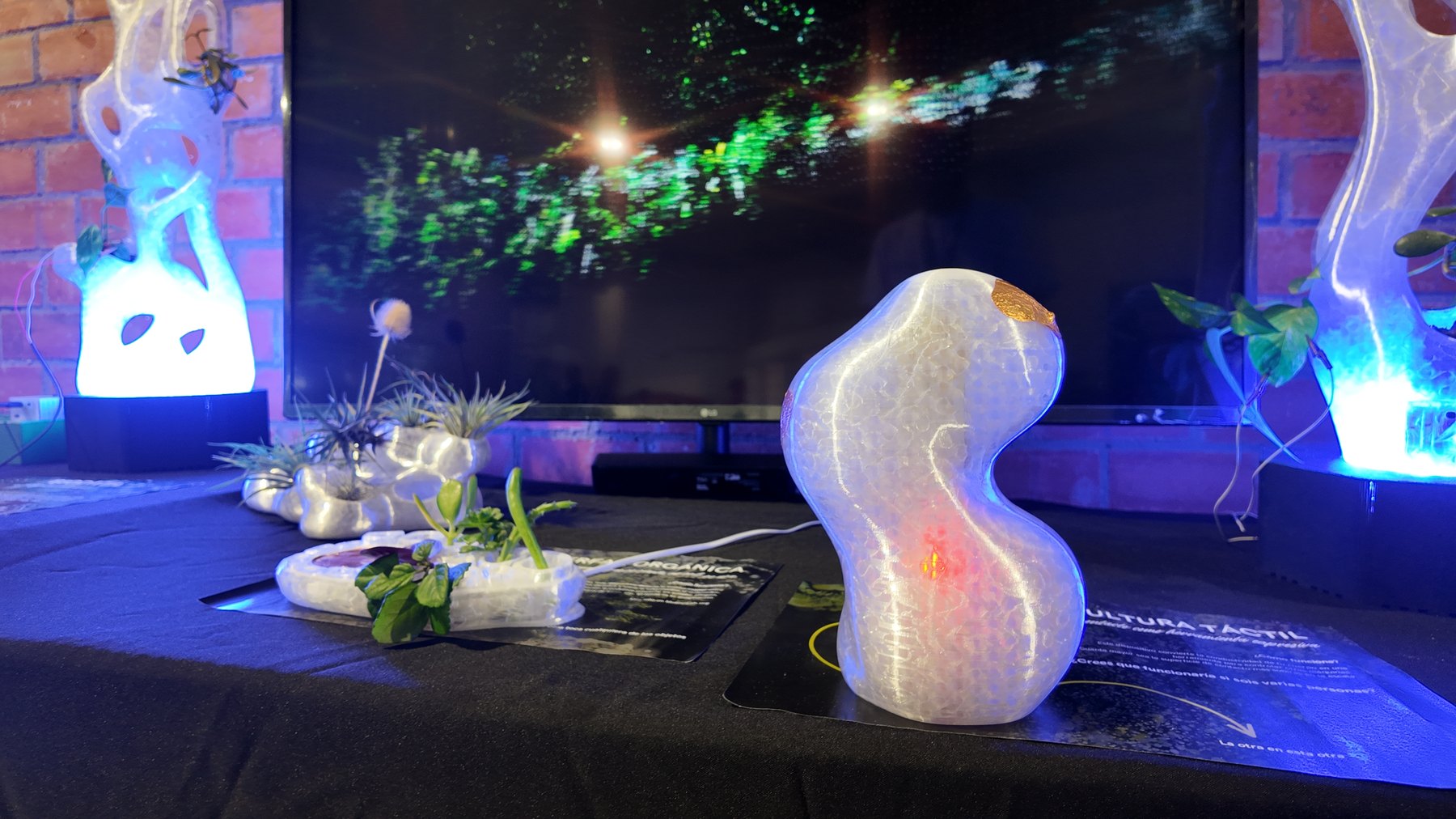
Two devices invited visitors to join that composition more directly. One organic interface, built with succulents, allowed people to generate notes and gently alter the virtual environments—sound and image answering the same gesture. Another responded to electrical conduction and contact between skins, making the sound rise or fall according to how bodies met the surface. The technical detail mattered less than the sensation: that music could thicken when hands touched, that a plant could hold a voice in the mix, that rural matter could remain audible inside a digital scene.
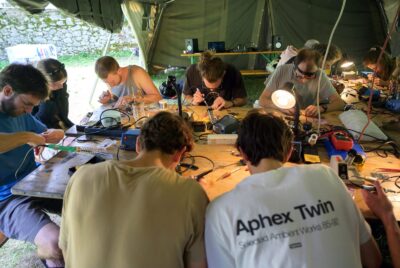
Mediation sessions on 20 and 22 October, led by Fernando Fernández Sánchez—artist, designer and co-founder of MolinoLab in Sancti-Spíritus, Salamanca—kept the work open to conversation. Visitors could ask how biodata is read, how landscapes are digitized, and why an interspecies piece belongs in a forum on culture and rural life.
Sinfonía Biótica did not claim to speak for plants or fungi. It offered something quieter and, perhaps, more useful: a practice of shared listening in which the rural is not only represented, but invited to compose.