

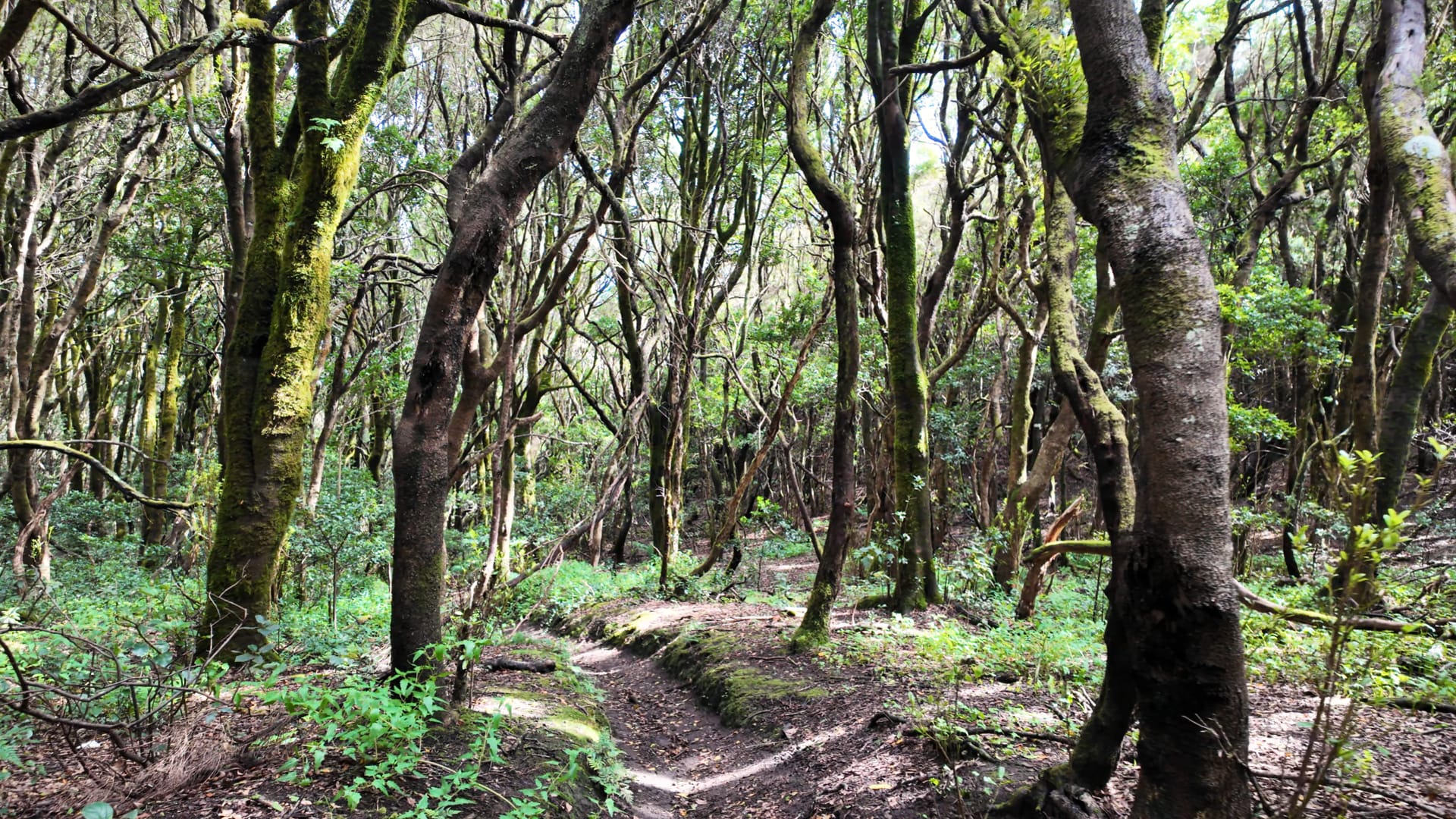
The Laurisilva Forest in the Anaga Rural Park (in the northeast of Tenerife, Canary Islands, Spain) is one of the most important natural treasures of the archipelago. It is a dense, humid evergreen forest that represents a relic of the ancient subtropical forests that covered vast areas of the Mediterranean basin and North Africa during the Tertiary period, some 20 million years ago. These forests largely disappeared due to climatic changes (the ice ages and subsequent aridification), surviving only in a few Atlantic archipelagos like the Canaries, Madeira, and the Azores.
The Anaga massif, with its rugged mountains and deep ravines, captures the moisture from the northeast trade winds, creating the constant humidity and mild temperatures necessary for the Laurisilva to thrive. This makes it one of the best-preserved examples of this type of forest in the world.
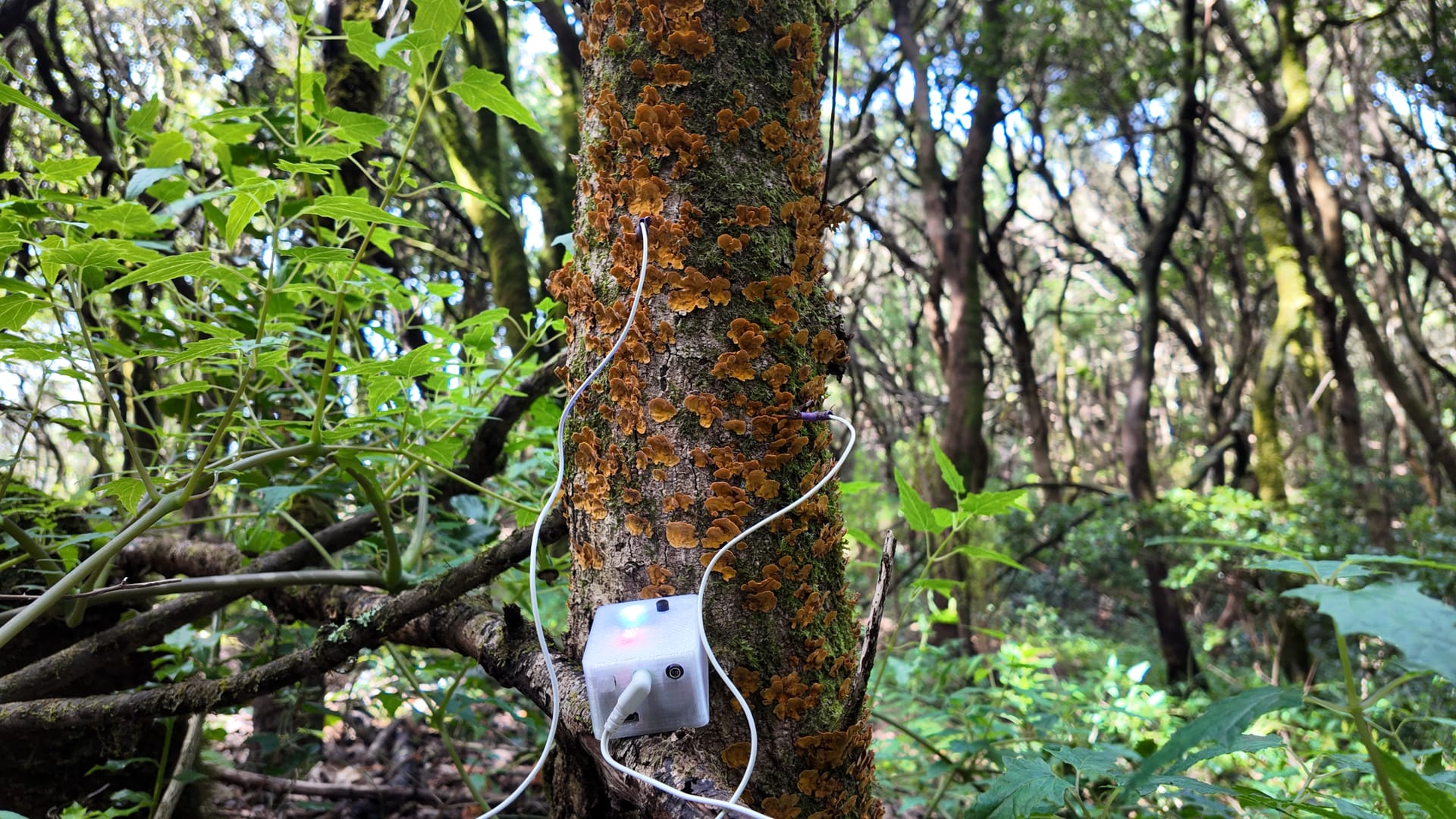
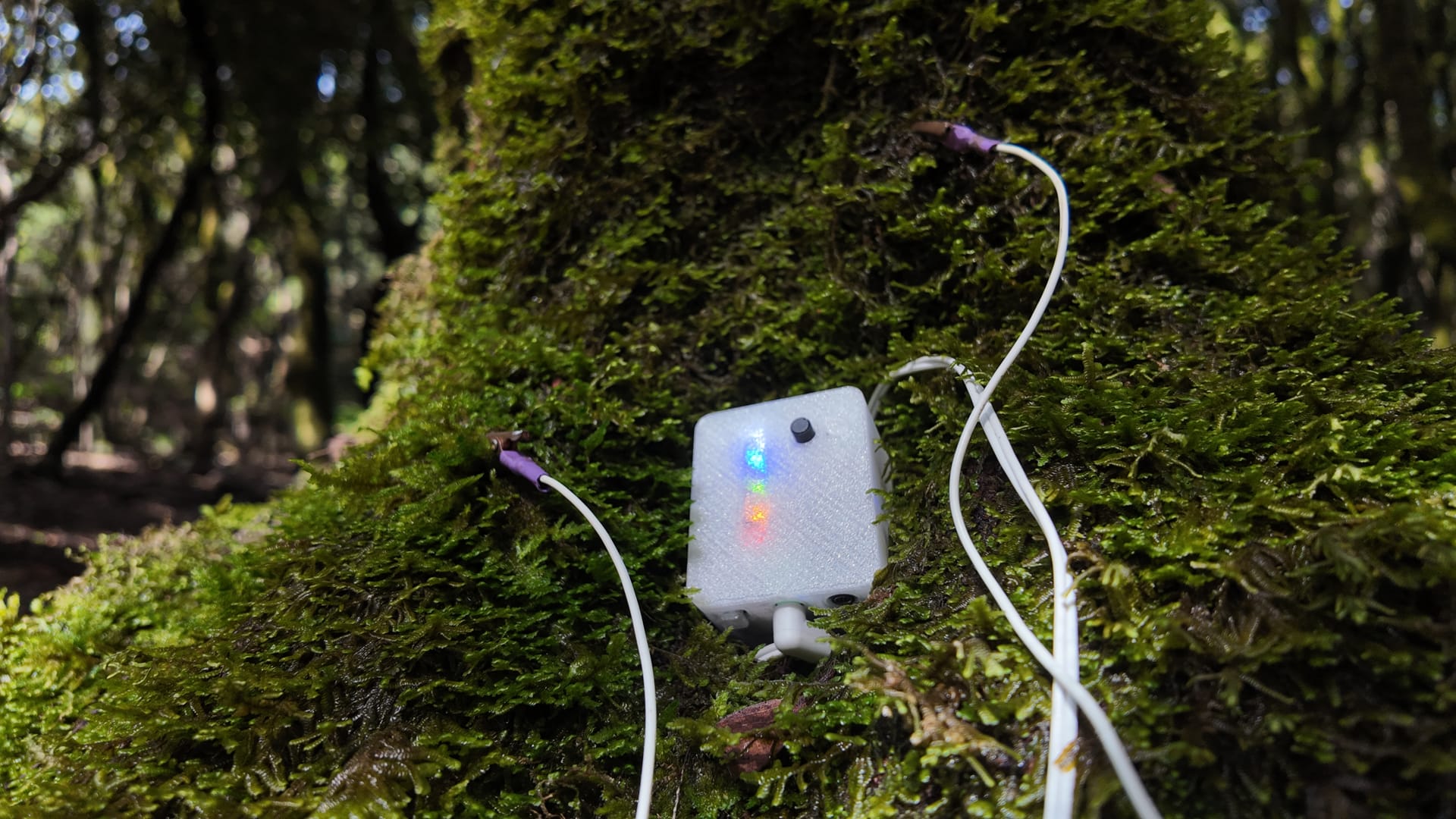
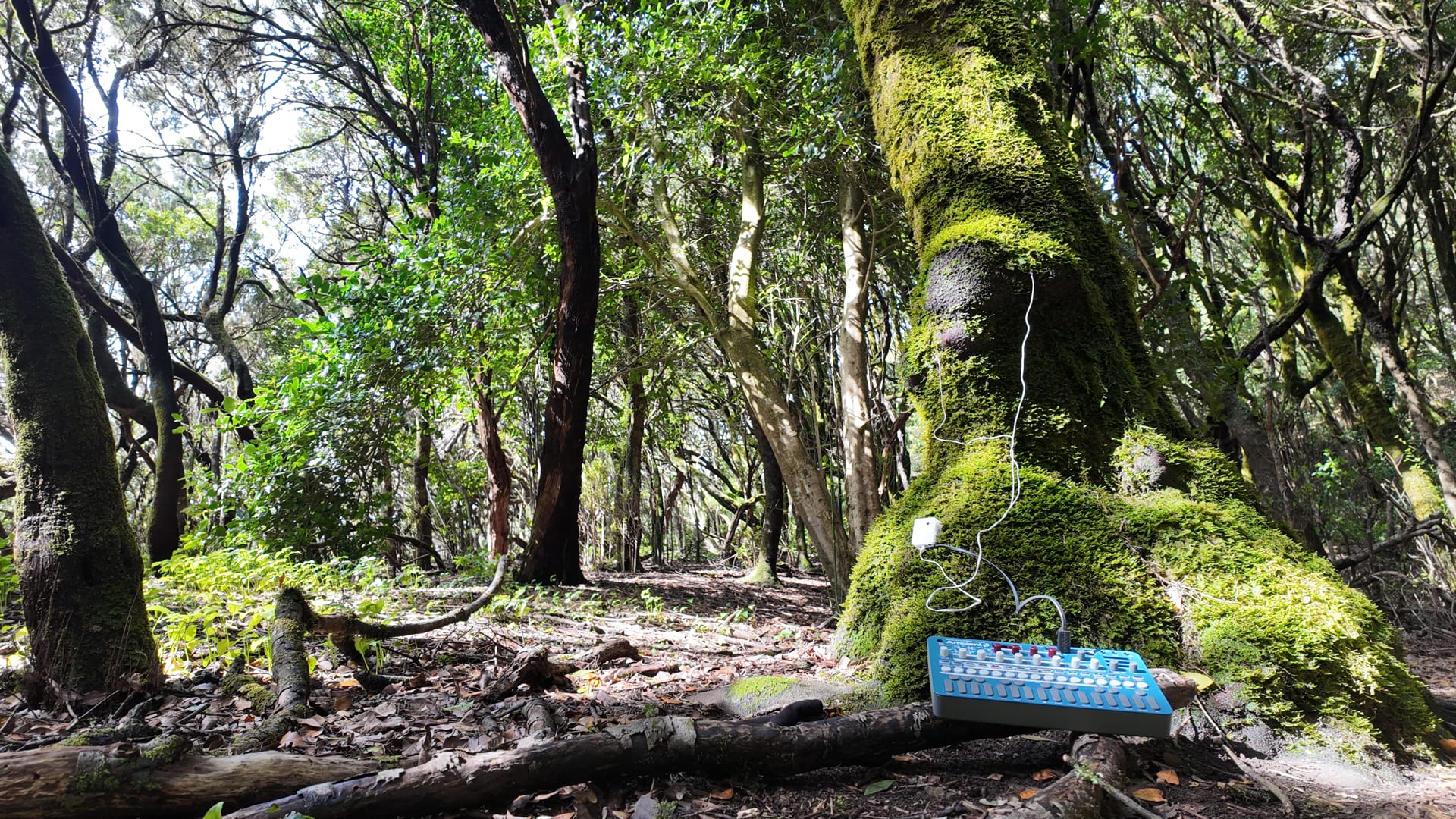
Collecting biodata and sounds from Laurisilva forest
Key Information
- Location: Anaga Rural Park (Parque Rural de Anaga), northeastern tip of Tenerife, Canary Islands, Spain.
- UNESCO Designation: Core part of the “Ancient and Primeval Beech Forests of the Carpathians and Other Regions of Europe” World Heritage Site, specifically as “Laurisilva of Madeira” extension, which includes forests in Anaga.
- Ecosystem Type: Subtropical humid forest (Laurisilva or Laurel Forest).
- Climate: Mild year-round temperatures (13-18°C / 55-64°F) with very high humidity (often 90-100%) due to the “horizontal rain” created by the trade winds.
Type of Trees and Flora
The forest is characterized by a variety of tree species with lauroid leaves—broad, glossy, dark green, and leathery—an adaptation to capture moisture from the fog.
Dominant Tree Species:
- Laurus (Laurus novocanariensis): The true laurel, from which the forest gets its name. Its aromatic leaves are used as a culinary herb.
- Til (Ocotea foetens): Also known as “Stinkwood,” it’s one of the largest trees in the forest and can live for centuries. Its wood was historically prized.
- Viñátigo (Persea indica): A large tree related to the avocado, known for its reddish wood.
- Barbusano (Apollonias barbujana): Notable for its beautiful dark, marble-like wood.
Other Characteristic Plants:
- Tree Heath (Erica arborea): Often forms a transitional zone.
- Giant Ferns: Species like Woodwardia radicans create a lush understory.
- Mosses, Lichens, and Liverworts: These epiphytes cover every surface—tree trunks, branches, and rocks—creating a magical, green, “enchanted forest” atmosphere. This is a key indicator of the forest’s pristine humidity.
- Endemic Species: The forest floor is home to many plants found nowhere else on Earth.
Longevity of the Specimens
The trees in the Anaga Laurisilva are exceptionally long-lived, thanks to the stable, humid climate and the lack of extreme seasons.
- Typical Lifespan: Many of the dominant trees (Til, Viñátigo, Barbusano) can easily live for 500 to 800 years.
- Ancient Giants: Some of the oldest specimens, particularly of Til (Ocotea foetens), are estimated to be over 1,000 years old. These ancient beings were already mature when the first European conquistadors arrived on the islands.
- Growth Pattern: They grow very slowly in the dense, competitive forest, developing massive, often twisted trunks covered in thick, moisture-retaining bark and a canopy that intertwines to form a continuous green roof.
Ecological and Cultural Importance
- Water Sponge: The Laurisilva acts as a colossal water reservoir. It captures fog (horizontal precipitation), which condenses on the leaves and mosses and drips to the ground, recharging the island’s aquifers. It is said to “create its own rain.”
- Biodiversity Hotspot: It is a refuge for an immense number of endemic invertebrates (insects, snails) and birds. Iconic species include the White-tailed Laurel Pigeon (Columba junoniae) and the Bolle’s Laurel Pigeon (Columba bollii), which depend entirely on this forest for survival.
- Cultural Heritage: The ancient Guanches (the pre-Hispanic inhabitants of Tenerife) used the forest for shelter and resources. Later, its wood was used in shipbuilding and carpentry, leading to periods of over-exploitation. Today, it is a strictly protected area.